


9 best brand intelligence software for 2026: My top picks
- Brandwatch Consumer Intelligence: Best for broad brand intelligence coverage
Chosen by enterprise teams that need deep historical data, broad source coverage, and advanced analysis for tracking brand narratives across regions and channels. (Pricing available on request.) - BrandMentions: Best for fast brand mention and reputation monitoring
Commonly used by smaller teams that want quick alerts and straightforward tracking without heavy setup or complex analysis layers. (Free trial available; paid plans start at $79 per month.) - YouScan: Best for visual and image-based brand intelligence
Picked when teams need to understand brand presence in images, logos, and visual social content alongside text-based mentions. (Free trial available; paid plans start at $499 per month, billed annually) - Cyble: Best for brand intelligence combined with digital risk monitoring
Often chosen where brand monitoring overlaps with threat intelligence, dark web tracking, and risk exposure analysis. (Pricing available on request.) - Qualtrics Strategy & Research: Best for enterprise brand and market research
A research platform that centralizes brand tracking, survey design, and market analysis in one environment. (Pricing available on request.) - Tracksuit: Best for ongoing brand health and perception tracking
Used by brand and insights teams that want consistent brand metrics and long-term tracking rather than real-time social listening. (Pricing available on request.) - Scrunch AI: Best for influencer and creator brand intelligence
Commonly picked when teams need visibility into creator ecosystems, brand alignment, and earned media influence rather than broad social monitoring. (Free trial available; paid plans start at $100 per month) - Suzy: Best for brand intelligence through consumer panels and surveys
Used when teams want structured consumer feedback and on-demand research alongside brand perception analysis. (Pricing available on request.) - Audiense: Best for audience segmentation and community intelligence
Selected for deep audience, community, and engagement analysis. ( Pricing on request for the Audience Intelligence, free plan available; paid plans start at $250 per year for X Marketing.)
*These tools are top-rated in their category, according to the G2’s Winter 2026 Grid® Report for brand intelligence software. I’ve highlighted where each tool tends to fit best, so you can quickly narrow down options based on your brand, insights, and decision-making needs.
9 best brand intelligence software I recommend
Brand intelligence software helps turn scattered brand mentions, social conversations, reviews, and media coverage into a clear, structured view of how a brand is actually perceived. The right tool doesn’t just collect data; it helps one understand sentiment, spot reputation risks early, and see how brand perception shifts across channels without getting lost in noise.
What I’ve found is that the best brand intelligence platforms show me why conversations are happening, what’s driving sentiment changes, who is influencing the narrative, and where attention needs to be focused next. Whether it’s identifying emerging brand risks, tracking campaign impact, benchmarking competitors, or using automation to surface meaningful insights, strong tools replace guesswork with context.
G2 Data shows adoption across small businesses, mid-market companies, and enterprises alike, reflecting how brand visibility matters at every stage of growth. Most teams can start seeing insights quickly, which helps them respond faster, align messaging, and make more confident decisions.
What separates the stronger platforms in this category isn’t the number of sources they pull from. It’s whether they can hold historical context, connect a shift in sentiment to a cause, and make findings easy to share with leadership who weren’t in the room when the data was pulled. Platforms that fail at any one of these create work instead of eliminating it.
How did I find and evaluate the best brand intelligence software?
The shortlist came from G2’s Winter 2026 Grid Reports for brand intelligence software, using G2 scores, user satisfaction ratings, and market presence across company sizes as the primary filters.
From there, AI-driven analysis across hundreds of verified G2 reviews surfaced the recurring themes that matter for real brand and marketing workflows. The focus wasn’t on feature checklists. It was what consistently showed up when teams described working under pressure: data coverage across social, news, reviews, and forums; sentiment accuracy and whether context came with the score; alerting speed for emerging risks; competitive benchmarking depth; and how smoothly insights moved from analyst to executive.
That’s what separates platforms delivering actionable brand intelligence from those just aggregating mentions. I haven’t used every software personally, so I cross-checked my findings with insights from marketing, brand, communications, and digital strategy teams who actively rely on them. The visuals and product references included in this article are sourced from G2 vendor listings and publicly available product documentation.
What makes the best brand intelligence software worth it: My criteria
Clear themes emerged from comparing thousands of G2 user reviews with how brand intelligence software operates in real marketing, brand, and communications tasks. Here’s what I prioritized when evaluating the best brand intelligence software.
- Clear sentiment and context interpretation: Raw sentiment scores aren’t enough. The best tools help explain why sentiment is shifting by tying it to topics, events, campaigns, or influencers. This context allows brand, PR, and leadership teams to act with confidence rather than guess at causes.
- Timely detection of brand risk: Brand intelligence only creates value if it surfaces issues early. Platforms that stand out consistently alert teams to emerging risks, such as sudden spikes in negative sentiment or unusual conversation patterns, before they escalate into reputational damage.
- Usability across non-technical teams: These tools are often used by marketing, PR, and communications teams rather than by data specialists. The best platforms balance analytical depth with intuitive workflows, so insights can be explored, shared, and explained without heavy training or reliance on analysts.
- Actionable reporting and sharing: Insights lose value if they can’t travel. Effective brand intelligence software simplifies converting findings into reports, summaries, and alerts that leadership and external teams can rapidly grasp. This fosters alignment among marketing, communications, and executive stakeholders.
- Reliable data coverage across channels: Brand perception is fragmented across social media, news, reviews, forums, and blogs. The most effective tools consistently pull from multiple sources and normalize that data so teams aren’t forced to piece together insights from disconnected systems.
- Scalability as brand complexity grows: As organizations expand, brand monitoring becomes more complex, with more regions, languages, products, and stakeholders. The top brand intelligence software scales seamlessly, enabling teams to increase complexity while maintaining clarity and speed.
No brand intelligence software excels in all areas. The best choice ultimately depends on whether your focus is on early risk detection, deeper insights, collaboration, or executive reporting.
Below, you’ll find authentic G2 reviews from users of brand intelligence software. To be included in this category, a platform must:
- Monitor brand mentions and conversations across multiple external channels
- Analyze sentiment, trends, or shifts in brand narratives over time
- Support brand, marketing, or communications teams with actionable insights
- Be actively reviewed and evaluated by users on G2 within the category
*This data was pulled from G2 in 2026. Some reviews may have been edited for clarity.
1. Brandwatch Consumer Intelligence: Best for broad brand intelligence coverage
Brandwatch Consumer Intelligence translates fragmented online discussion into structured signals, into structured signals that inform brand, market, and competitive understanding at scale.
What struck me while going through the G2 review data is that insight quality is consistently where the platform delivers the most value. Teams frequently highlight their ability to surface trends and measure brand health across large datasets, helping organizations identify shifts in sentiment, emerging topics, and early signals tied to campaigns, launches, or reputational risk.
This aligns with its strongest G2 feature ratings, where trend analysis rates at 86% and brand health at 85% stand out as core capabilities supporting ongoing monitoring and long-term strategic analysis.
Usability and workflow fit also emerge as strengths in day-to-day use. G2 users often describe the interface as approachable once familiar, with flexible query construction, segmentation, and filtering that support nuanced analysis without forcing rigid templates. Dashboards and visual outputs are commonly cited as effective for communicating insights across teams, reducing friction when translating analysis into decisions.
G2 reviewers highlight Brandwatch’s ability to pull data from social media, blogs, forums, and news sources in real time. Teams use this to monitor brand conversations across multiple channels without piecing together data from separate tools. The breadth of source coverage is frequently described as a core reason teams choose the platform over narrower alternatives.
The platform includes sentiment analysis, image recognition, and topic clustering directly in the workflow. Teams mention these capabilities as significantly reducing the time spent manually sorting through large data volumes. G2 review data shows strong confidence in how these tools speed up insight generation during campaign monitoring and issue tracking.
The query builder supports multi-topic, multi-language, and multi-region searches within a single query. For organizations tracking several brands or markets at once, this depth makes analysis more precise without multiplying manual effort. G2 reviewers frequently call this out as one of the most practical capabilities for nuanced, large-scale analysis.
Support quality shows up repeatedly across recent G2 reviews as a genuine differentiator, reflected in the quality of support G2 rating at 89%. Users describe the team as responsive and knowledgeable during both setup and ongoing use. That consistency reduces friction when teams are building new queries or troubleshooting dashboards for the first time.
Query configuration and dashboard setup require more hands-on time than simpler monitoring tools, which is most noticeable for teams setting up their first advanced queries or multi-market dashboards. G2 reviewers note that the platform’s support team and structured help resources make that ramp-up period shorter, and the query flexibility that opens up once configuration is complete becomes one of the platform’s most practical strengths.
TikTok video content and some Instagram data are not fully accessible within Brandwatch, as the platform can only collect what those networks expose through their APIs. For teams whose brand monitoring centers on video-native content or Instagram-first campaigns, this creates visibility gaps that require supplementing with other tools. G2 reviews note that across news, blogs, forums, and mainstream social sources, coverage is broad, consistently updated, and reliable enough to support strategic brand decisions at scale.
Brandwatch Consumer Intelligence is best understood as a mature brand intelligence platform that balances analytical depth with broad market adoption. With trend analysis and brand health tracking standing out as its most valued capabilities, the platform remains especially relevant for marketing, insights, and communications teams in consumer-driven industries that need a reliable, real-time understanding of brand perception at scale.
What I like about Brandwatch Consumer Intelligence:
- Reviewers consistently highlight how effectively it turns large volumes of unstructured social and online data into clear insights around trends, sentiment, and brand health.
- Flexible query building and customizable dashboards make it well-suited for teams that need tailored analysis and stakeholder-ready reporting across markets.
What G2 users like about Brandwatch Consumer Intelligence:
“What I appreciate most about Brandwatch Consumer Intelligence is how it transforms vast amounts of unstructured data into clear, actionable insights. The platform’s comprehensive social listening, along with its robust segmentation and sentiment analysis features, makes it significantly easier to gain a genuine understanding of consumer behavior and market trends.
I also highly value the platform’s flexibility, whether I’m building tailored queries or designing dashboards that effectively communicate insights to various stakeholders. Additionally, the support and training team is exceptional; they are responsive and knowledgeable.”
– Brandwatch Consumer Intelligence review, Karla D. S.
What I dislike about Brandwatch Consumer Intelligence:
- Query building and dashboard setup take more time upfront than simpler tools, which can slow down teams during initial onboarding. Once the configuration is complete, most teams find that the process becomes straightforward, and the flexibility becomes a genuine asset
- TikTok video content and some Instagram data depend on what those platforms share via their APIs, which can create gaps for teams focused on video-native channels. However, the coverage across news, blogs, forums, and mainstream social sources remains consistently strong.
What G2 users dislike about Brandwatch Consumer Intelligence:
“It has a limited ability to parse social media pages and accounts as well as non-text content.”
– Brandwatch Consumer Intelligence review, Alexander S.
2. BrandMentions: Best for fast brand mention and reputation monitoring
BrandMentions is a monitoring and analysis layer designed to surface where, how, and why brands are discussed across the web. What I found across BrandMentions reviews is that long-tail source coverage is what teams mention most when explaining why they stayed on the platform. Reviewers describe catching conversations on Reddit and niche forums that their previous tool never surfaced.
G2 users consistently describe the dashboard as easy to navigate, making it straightforward to move from raw mentions to understanding exposure and reach. Emphasizing how many people may have seen a mention, rather than just who published it, helps teams evaluate which channels generate meaningful visibility versus background noise.
G2 review feedback also points to built-in sentiment analysis that helps teams quickly distinguish high-value mentions from lower-impact references without manual triage.
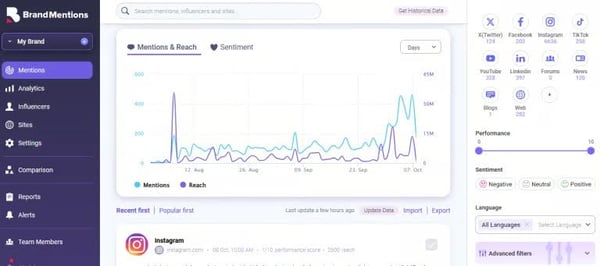
Features like brand health (88%) stand out as an area where review data shows strong consistency and reliability. G2 users frequently note the platform’s ability to surface mentions from long-tail sources that other tools overlook, supporting use cases like identifying early brand advocacy, uncovering organic backlinks, and monitoring reputation signals across fragmented online spaces.
Alerts arrive consistently and cover platforms that standard social tools often miss, including Reddit and niche forums. For marketing and PR teams that need to react quickly, this speed reduces the gap between a conversation starting and a team being aware of it. Several G2 reviewers specifically highlight how the real-time alert system keeps them informed without requiring constant manual dashboard checks.
With a 89% tracking rate, G2 reviews indicate that brand and competitor mentions can be tracked within the same workflow, without needing separate tools or projects. Teams set up distinct monitoring streams for different competitors or product lines, keeping analysis organized and easy to compare. This is particularly useful during campaign periods, when understanding relative brand activity matters as much as tracking your own.
Teams can generate reports in multiple formats, including PDF, shareable links, and Excel, with minimal manual formatting required. G2 reviewers note that client-ready reports can be produced in just a few clicks, which reduces time spent on presentation prep. For agency teams managing multiple brand accounts, this output flexibility directly supports faster turnaround.
AI-powered sentiment labeling works across the platform’s full mention stream, instantly categorizing conversations as positive, neutral, or negative without manual review. Multiple G2 users highlight how this accuracy speeds up analysis during time-sensitive monitoring periods, including campaign launches and emerging reputation events. The result is faster prioritization and less time spent sorting through raw data before reaching conclusions that matter.
BrandMentions is primarily optimized for desktop-based workflows, which means teams tend to manage monitoring and analysis within structured work hours. As the platform continues to evolve with regular feature updates, G2 reviewers note the desktop workflow is consistently described as reliable and well-structured, with real-time alerts and sentiment tracking performing at full capability for teams managing monitoring from a primary workstation.
The volume of incoming mentions can feel dense when a brand is active across many sources. Teams that are new to the platform may need some time to fine-tune filters and alert settings before the signal-to-noise ratio feels right for their workflow. G2 reviewers point out that once alert configurations are dialed in, the platform becomes significantly easier to manage, and the most relevant mentions surface consistently.
BrandMentions remains a solid fit for marketing and growth teams that need reliable brand intelligence beyond surface-level social monitoring. Its ability to surface mentions from niche and less-indexed sources and contextualize brand health across the wider web, reinforced by its highest-rated Tracking capability, continues to differentiate it for teams focused on understanding true brand visibility.
What I like about BrandMentions:
- BrandMentions stands out for how thoroughly it tracks brand mentions across the wider web, including niche sites and long-tail sources that many brand intelligence tools tend to miss.
- Reviewers consistently highlight the clarity of the analytics, especially the ability to understand reach and exposure, which helps teams focus on meaningful visibility rather than raw mention counts.
What G2 users like about BrandMentions:
“I love how BrandMentions allows me to continuously listen to every online conversation about my brand in real time, helping me spot trends, sentiment, and opportunities quickly. The AI-powered insights and sentiment analysis are what I like most, as they turn raw online conversations into clear, strategic brand intelligence. The AI helps me quickly understand how people feel about my brand without manually reviewing mentions, highlighting sentiment shifts and patterns so I can make faster, more informed brand decisions. The initial setup was excellent, too.”
– BrandMentions review, Philipp P.
What I dislike about BrandMentions:
- Mobile functionality is more limited than the desktop experience, which can be inconvenient for team members who need on-the-go access to alerts and dashboards, though the core desktop workflow remains strong and reliable.
- Incoming mention volume can feel dense at first, particularly for new users setting up filters for the first time across active or broad brand categories. Most G2 reviewers find that fine-tuning alerts over the first few sessions brings the noise down considerably, and the platform’s filtering system becomes a reliable signal prioritization layer once configured.
What G2 users dislike about BrandMentions:
“The volume of data can feel overwhelming at first, and it takes some trial and error to fine-tune alerts so they only show the most relevant mentions.”
– BrandMentions review, Merlin H.
3. YouScan: Best for visual and image-based brand intelligence
As a brand intelligence solution, YouScan focuses on monitoring and analyzing brand mentions, visual content, and audience sentiment across social and public platforms. What I found across YouScan reviews is that visual intelligence consistently stands out as a key strength. I noticed reviewers frequently mention that the platform surfaces logo appearances and image-based brand mentions that their previous tools failed to capture, something that matters especially for consumer and lifestyle brands, where visual presence shapes brand perception just as much as text conversations.
Visual Insights is one of the capabilities that sets YouScan apart from most social listening tools. It detects brand appearances in images and user-generated content, including logo recognition, even when the brand is not mentioned in text. G2 reviewers working on consumer or lifestyle brands find this particularly useful for understanding how their brand appears visually across platforms, not just in written conversation.
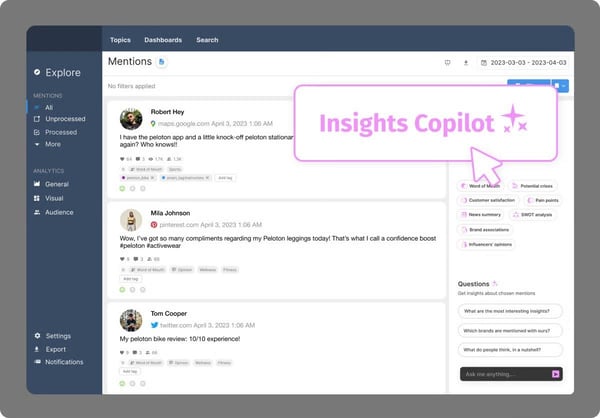
Access to sources that are less uniformly supported across the category, including TikTok content and Google Maps reviews, alongside mainstream social platforms. Visual insights and geographic accuracy are frequently mentioned as valuable for region-specific analysis, reinforcing YouScan’s relevance for brand intelligence use cases that depend on understanding where and how sentiment forms, not just how often brands are mentioned.
The Insights Copilot feature helps teams move from raw data to structured conclusions faster. Instead of manually reviewing large volumes of mentions, teams can use it to surface patterns, summarize sentiment shifts, and identify what is driving changes in brand perception. G2 reviewers describe it as a practical addition that reduces analysis time without requiring deep analytical expertise.
G2 reviews describe their customer success contacts as proactive, knowledgeable, and responsive to specific workflow questions, supported by the quality of support at 99% on G2. For organizations setting up complex queries or onboarding new team members, that hands-on support reduces time spent troubleshooting independently.
G2 review data also points to strong analytical fundamentals. Features like comparison at 93% reflect how effectively teams can monitor brand activity over time and benchmark performance across channels. Dashboards are commonly described as structured and easy to interpret, supporting faster reporting cycles and reducing the need for manual data consolidation.
Coverage spans over 200 languages and multiple regional markets within a single monitoring setup, removing the need to configure separate tools for each geography. Teams operating across international markets use this to track brand mentions, competitor activity, and trending topics consistently across regions. G2 users working in multi-market environments describe this breadth as one of the platform’s clearest practical advantages for global brand intelligence workflows.
During heavy analysis periods, teams may experience slower report loading when working with highly detailed datasets, which can interrupt review cycles or delay time-sensitive insights. G2 reviewers note that for standard monitoring workflows and regular reporting cycles, performance remains consistent. The depth of insight the reports deliver is frequently cited as worth the additional processing time during intensive analysis runs.
Setting up queries accurately requires familiarity with how the platform structures its search logic. Teams new to the platform may need additional time before their query configurations produce clean, well-filtered results. G2 reviewers consistently highlight that the support team is readily available during this period and that most teams reach a comfortable level of confidence with queries after the initial setup phase.
YouScan remains a strong fit for brand and insights teams that prioritize reliable tracking and comparative analysis over raw mention volume. Its consistently high ratings for Tracking and Comparison reinforce its value as a brand intelligence platform built for ongoing monitoring, benchmarking, and insight-driven reporting.
What I like about YouScan:
- YouScan’s visual and image-based analysis makes it easier to understand how brands appear in images and visual social content, not just text mentions.
- Its support for TikTok content and Google Maps reviews gives teams visibility into channels that are often limited or missing in other brand intelligence tools.
What G2 users like about YouScan:
“It’s giving social media insights in one place and helps me track brand mentions, understand audience sentiment, and analyze trends easily, or that dashboards are clear and make reporting faster and more accurate for decision making.”
– YouScan review, Ankita P.
What I dislike about YouScan:
- Large dataset reports can take longer to load during intensive analysis periods, which may disrupt timing for teams running tight review cycles. G2 reviewers note the additional processing time as a reasonable exchange for the level of analytical detail delivered.
- Query setup requires time to learn before results are consistently clean and well-filtered, which adds an initial adjustment period for teams new to the platform. However, the platform’s support team is helpful in shortening that initial period considerably.
What G2 users dislike about YouScan:
“It is difficult to single out weaknesses. The first thing that comes to mind is a slight difficulty with the configuration of the cabinet, where you need to manually specify the command for the platform, but even this is easy to learn thanks to the staff of the company.”
– YouScan review, Khojiakhmad N.
4. Cyble: Best for brand intelligence combined with digital risk monitoring
Cyble sits in the brand intelligence category with a strong emphasis on digital risk and brand protection. It identifies brand abuse, impersonation, deepfakes, and malicious infrastructure that can directly undermine brand trust.
One thing I kept seeing across G2 reviews is that Cyble’s strongest signal is its ability to surface and act on brand-related threats quickly. Detection of fake websites, malicious links, and impersonation attempts is the capability G2 users cite most often, paired with takedown workflows that help reduce response time. This capability is frequently cited as critical for teams managing active brand abuse scenarios.
For financial services, healthcare, and globally exposed brands, deepfake detection and executive impersonation tracking address reputational risks that traditional brand monitoring tools often miss. G2 review feedback emphasizes how these capabilities help teams address emerging reputational risks that traditional brand monitoring tools often miss, reinforcing Cyble’s positioning beyond surface-level brand listening.
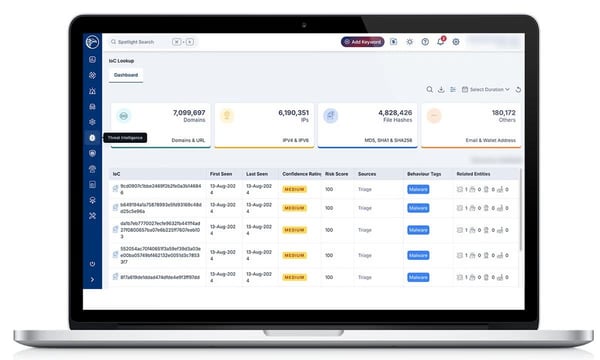
Cyble’s broader intelligence context strengthens this threat response capability. G2 reviews reference malware sandboxing, C2, and DDoS visibility, and tracking of cybercrime and state-sponsored actors as valuable for assessing threat severity. This layered intelligence helps teams prioritize incidents and respond with clearer situational awareness.
Features, like with AI rated at 85%, reviewers describe automated enrichment, faster classification, and clearer risk prioritization across surface web, dark web, and cloud environments. This intelligence depth extends into practical workflows like third-party risk assessments and rapid cyber posture reporting.
Blaze AI helps teams interpret complex threat data and generate reports without requiring deep manual analysis. It works with organization-specific data, allowing security teams to contextualize findings quickly and communicate risk posture to leadership in a shorter timeframe. G2 users describe it as a practical addition that reduces the gap between raw intelligence and actionable output.
With an ease of setup rated at 96%, deployment is consistently described as quick across recent G2 reviews, with most teams going live within a day to a week. This matters for security teams that cannot afford extended implementation timelines before active monitoring begins. The ease of onboarding is frequently cited alongside the platform’s depth as a reason organizations switch to Cyble from competing threat intelligence tools.
G2 reviews indicate that Cyble’s depth of intelligence comes with a denser interface experience. The platform offers multiple views and investigative pathways to support thorough analysis, which can increase navigation steps and require a longer orientation period for teams accustomed to streamlined, quick-lookup workflows. However, when teams invest time in learning the platform’s investigative pathways consistently report that the layered interface unlocks a level of threat context and brand risk visibility that simpler, single-view tools cannot replicate.
Support response times vary depending on geography, with teams in certain regions experiencing longer waits for in-timezone assistance. Organizations operating across multiple regions may find that this affects how quickly they can resolve configuration questions or alert management issues. G2 reviewers acknowledge that the support team is knowledgeable, helpful, and thorough, and the platform’s detailed documentation is structured well enough to guide teams through most configuration and alert management questions independently.
All in all, Cyble is best suited for organizations where brand abuse and external threats carry direct operational or regulatory risk. Its strengths in fast threat detection, deepfake monitoring, and intelligence-led brand protection make it particularly relevant for security-driven teams in highly exposed industries. For enterprises that need brand intelligence to function as part of an active risk defense strategy, Cyble stands out as a capable and decision-ready platform at scale.
What I like about Cyble:
- Reviewers consistently highlight Cyble’s strength in detecting brand abuse, impersonation, and deepfakes, paired with takedown workflows that help teams act quickly rather than just monitor threats.
- The platform combines brand intelligence with deeper cyber context, such as threat actor tracking and malware analysis, reducing the need to rely on separate security tools for external risk visibility.
What G2 users like about Cyble:
“I find Cyble tremendously helpful in protecting from brand abuse and scanning attack surfaces. It also provides effective malware sandboxing and C2 DDoS attack protection. I appreciate the coverage of cybercrime and the tracking of state-sponsored threat actors. Additionally, Cyble’s cloud security posture management is a feature I like. I am impressed with Cyble because it is not only fast but also provides detailed insights along with recommended fixes. The initial setup was very easy and only took about a week. Finally, multiple users have given very positive feedback about it.”
– Cyble review, Javed A.
What I dislike about Cyble:
- The platform deploys quickly, but navigating its full investigative depth requires additional orientation once teams move beyond initial setup. Teams accustomed to streamlined, quick-lookup workflows will notice this most during early use. G2 reviewers note that familiarity with the layout develops quickly, and the layered interface unlocks threat context that simpler tools cannot replicate.
- In-timezone support coverage is thinner in some regions, which may slow resolution time for teams outside primary support hours. When the support team is reached, G2 reviewers consistently describe the engagement as knowledgeable and thorough, with resolutions that address the specific configuration or alert management need rather than offering generic guidance.
What G2 users dislike about Cyble:
“They need to reduce complexity in their user interface. There are too many clicks needed before reaching the result.”
– Cyble review, Nigam A.
5. Qualtrics Strategy & Research: Best for enterprise-grade brand and market research
Qualtrics Strategy & Research is a platform built around structured research workflows. It is designed to help organizations collect, centralize, and analyze brand, market, and customer data at scale. G2 review analysis shows it is most often used by teams that need a single platform to handle survey design, data collection, and reporting without stitching together multiple tools.
The platform supports complex logic, branching, and quota management within a drag-and-drop builder, allowing research teams to build sophisticated studies without custom scripting. Teams describe using this to run everything from brand tracking surveys to concept testing and opportunity assessment in one environment. Brand health is the highest-rated feature at 92%, reflecting how well the platform supports ongoing measurement of brand perception over time.
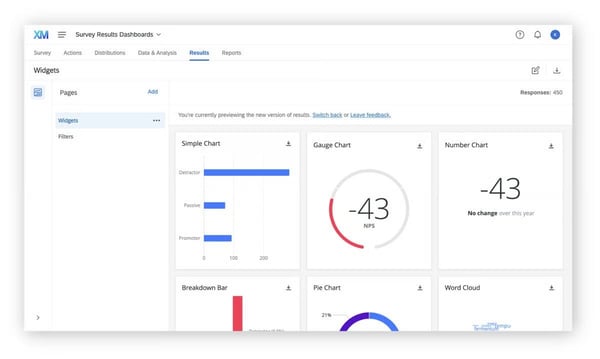 Real-time reporting and live dashboards are described in G2 reviews as one of the most practical strengths for day-to-day use. Teams use dashboards to monitor incoming responses, track sentiment shifts, and share findings with stakeholders without waiting for a full analysis cycle to complete. The comparison feature is rated at 90% on G2.
What I noticed across Qualtrics reviews is that the consolidation point is what resonates most. Teams describe replacing three or four separate research tools with one environment, with fewer exports, fewer logins, and one source of truth when results go to leadership.
Brand tracking, market insights, and customer behavior analysis can be managed within a single platform, reducing the friction of moving data between systems. G2 reviewers highlight this consolidation as a practical advantage for marketing, insights, and strategy teams that previously relied on multiple disconnected tools to cover the same ground.
The platform connects with analytics tools and CRM systems, linking survey data to existing operational data sources. G2 reviewers note this is most useful when brand research needs to feed directly into campaign or reporting workflows. Text IQ helps teams process open-text feedback at scale without manual review.
Ready-to-use templates cover common research scenarios, which means teams do not need to build study designs from scratch every time. G2 reviewers describe this as particularly useful when research needs to move quickly, such as during a campaign launch or product testing cycle. The combination of templates and flexible customization means teams can start fast and still tailor surveys to their specific brand or audience.
Teams can access surveys and collect responses offline after logging in, extending the platform’s usefulness beyond standard online research environments. Teams operating in field research, events, or lower-connectivity settings can still collect data without interruption. G2 reviewers highlight this as a practical advantage that most lighter survey tools do not offer.
Advanced features are spread across layered menus, which takes more time to navigate than simpler survey tools. Teams transitioning from lighter platforms may need additional time before they feel fully productive. G2 reviewers note that the platform’s documentation and active user community provide reliable support during that period.
Pricing is structured around the platform’s enterprise-grade depth, which can feel disproportionate for smaller teams or narrowly scoped projects that do not use the full feature set. G2 reviewers point out that the centralized environment, combining brand tracking, survey design, real-time reporting, and CRM integration, is where that investment pays back most visibly, replacing the cost and complexity of maintaining multiple separate research tools.
Qualtrics Strategy & Research is best understood as a research platform built for teams that treat brand and market insight as a continuous, operational function rather than a periodic exercise. For organizations that need centralized brand tracking, flexible survey design, and real-time reporting in one environment, the platform remains a well-established and capable choice.
What I like about Qualtrics Strategy & Research:
- The ability to centralize brand tracking, concept testing, and market research in one platform removes the need to manage multiple tools, which reduces data fragmentation and speeds up the path from research to decision.
- Live dashboards and real-time reporting make it straightforward to share findings with stakeholders during active research cycles, without waiting for a full analysis to complete.
What G2 users like about Qualtrics Strategy & Research:
“I like the user-friendly interface and tools for analysis in Qualtrics Strategy & Research. The simple process of importing survey templates is also a big plus for me.”
– Qualtrics Strategy & Research review, Connor C.
What I dislike about Qualtrics Strategy & Research:
- Advanced features are spread across layered menus, which takes more time to navigate than simpler survey tools. The core template-based workflows stay accessible throughout, but deeper functionality has a steeper path for teams new to the platform. G2 reviewers find that documentation and community resources help shorten that initial period considerably.
- Pricing reflects enterprise-level depth, which may feel higher than needed for smaller teams or projects with narrower research scopes. The platform consolidates brand tracking, survey design, and real-time reporting in one place, removing the need for multiple separate research tools.
What G2 users dislike about Qualtrics Strategy & Research:
“Some advanced features are hidden behind complex menus or require training to fully utilize. Collaboration between users, such as real-time co-editing or comment threads, feels limited too. Also, pricing tiers can be challenging for smaller teams like us or projects with a narrow scope, as you often pay for more capability than you actually use.”
– Qualtrics Strategy & Research review, panth m.
6. Tracksuit: Best for ongoing brand health and perception tracking
Tracksuit is built to give teams continuous visibility into brand health, awareness, and category position through structured, ongoing tracking. It centers on repeatable measurement, interactive dashboards, and comparison views that help marketing teams monitor brand movement over time rather than relying on isolated research snapshots.
G2 review analysis consistently highlights the value Tracksuit delivers at its price point. While going through the G2 users’ reviews, I noticed that it enables ongoing brand measurement that was previously limited to infrequent or outdated studies due to cost. This efficiency is closely tied to its underlying methodology and reporting structure, which center on repeatable brand health metrics and clear category benchmarks.
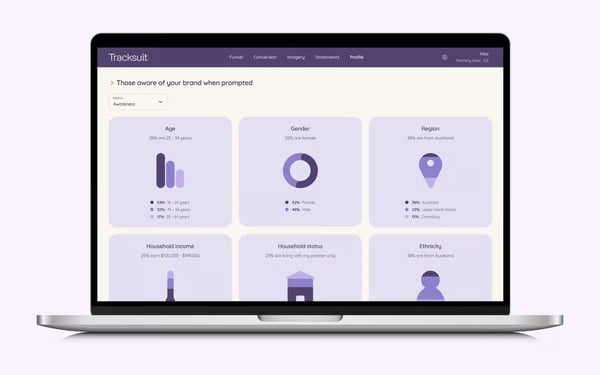
Brand health is Tracksuit’s highest-rated feature on G2 at 94%, reflecting strong confidence in the reliability of its core measurement outputs. Teams describe using these metrics to track awareness, consideration, and preference consistently, supporting long-term brand monitoring.
Ease of use and reporting practicality emerge as another distinct advantage. G2 reviews consistently describe the dashboard as intuitive, with minimal ramp-up required for new users. Interactive filters, straightforward exports, and CSV downloads support regular internal reporting and sharing, helping teams embed brand tracking into ongoing workflows.
The Comparison feature, rated at 93%, allows teams to understand a brand’s relative position within a defined competitive set. This capability is frequently referenced as valuable for contextualizing performance, particularly for marketing teams that need clear category benchmarks to guide positioning decisions.
Customer experience and product reliability also contribute to the platform’s appeal. G2 reviewers often point to a responsive and collaborative team, along with steady product improvements over time. AI-assisted features are mentioned as helpful for generating high-level insights, though they are generally viewed as a supporting layer rather than the primary reason teams choose Tracksuit.
Monthly data updates give marketing teams a near-real-time view of brand health, which supports faster decision-making during active campaigns. Teams describe using the platform to measure the direct impact of marketing investment on awareness and consideration, rather than waiting for periodic research reports. G2 reviewers note this ongoing cadence makes it easier to present brand performance to leadership with clear, time-linked evidence.
Brand coverage is tied to budget levels, which can limit how many brands teams track at the same time. This approach may require larger portfolios to stage tracking rather than monitor everything concurrently but it suits focused measurement on priority brands. G2 reviewers note that additional brands can be added at a reasonable incremental cost, and the measurement depth and reporting clarity the platform delivers for each tracked brand remains consistent regardless of portfolio size.
Market coverage is currently strongest in select geographies, which can affect teams that need to track brand performance across multiple international markets simultaneously. Brand and insights teams operating across regions may find some markets are not yet fully supported. G2 reviewers point out that the platform’s coverage has been expanding steadily, and the team is responsive to feedback about which markets matter most to their users.
Tracksuit fits best for marketing teams and growing brands that need dependable brand health and competitive insight without the cost or complexity of traditional research programs. Its strongest value lies in consistent measurement, clear benchmarking, and practical reporting workflows. For teams prioritizing ongoing brand visibility over episodic research, Tracksuit delivers consistent measurement without the cost or complexity of traditional research programs.
What I like about Tracksuit:
- Reviewers consistently highlight how Tracksuit makes ongoing brand health tracking accessible, replacing one-off studies with a clear, repeatable measurement cadence at a cost-efficient price point.
- The intuitive dashboard, strong comparison views, and easy exports support regular reporting and cross-team sharing without requiring extensive training or setup.
What G2 users like about Tracksuit:
“The price tag! You get a lot for relatively little. And it does what it says it does on the packet. Also, as the online reporting suite is essentially a SAAS product, they are consistently innovating and adding improvements.”
– Tracksuit review, Sean W.
What I dislike about Tracksuit:
- Brand coverage scales with plan size, which can require larger portfolio teams to stage their tracking rather than monitor all brands at once. G2 reviewers note that incremental additions are reasonably priced, and the core setup handles most priority tracking needs well.
- Geographic coverage is still developing in certain international markets, which may matter for teams managing brand performance across multiple regions, though the coverage has been growing consistently, and the team actively takes market expansion feedback on board.
What G2 users dislike about Tracksuit:
“The number of brands tracked is limited by my budget, although additional brands are reasonably priced.”
– Tracksuit review, Liz B.
7. Scrunch AI: Best for influencer and creator brand intelligence
Scrunch AI focuses on monitoring how brands appear, compete, and are interpreted across large language models.
G2 reviewers frequently mention that Scrunch AI is easy to set up and operate, with minimal technical overhead, as reflected in the ease of setup, rated at 90%. Prompt-level results are aggregated into clear, shareable visuals, helping teams communicate AI visibility performance internally.
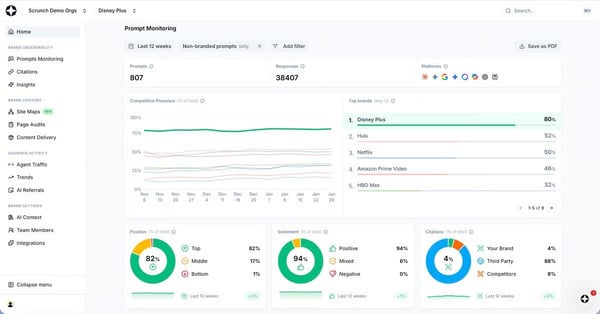
Teams use the platform to understand how their brands are referenced, ranked, and framed within AI-generated answers, providing insight into an area that traditional brand intelligence tools do not yet cover. This makes Scrunch AI particularly relevant for teams treating AI visibility as a new brand surface.
Tracking is the platform’s highest-rated feature on G2 at 93%, reflecting how consistently teams can monitor share of voice and competitive positioning across LLMs. Custom prompts are grouped into structured categories, enabling repeatable measurement across models rather than one-off checks. This setup supports ongoing brand visibility tracking without requiring manual reconfiguration each time a new monitoring cycle begins.
The structured prompt framework also facilitates ongoing observation of brand narratives. This repeatability makes Scrunch AI useful for monitoring narrative drift and competitive changes in AI-generated responses as models evolve.
What I found across Scrunch AI reviews is that teams are using it to answer a question that didn’t exist two years ago: how does our brand appear when someone asks an AI instead of running a search. Reviewers describe it as the first tool that made that question answerable in a structured, repeatable way.
The integrations with Google Analytics and Google Search Console allow teams to see AI-driven traffic alongside their broader web performance data without switching between tools. G2 reviewers describe this as especially useful for agencies managing multiple clients, where consolidating data sources saves significant reporting time.
G2 user reviews mention that feature requests are often acknowledged and acted on within weeks, which gives teams confidence that the platform will keep pace with how AI search continues to evolve. For agencies and brand teams working in a fast-moving space, that responsiveness reduces the risk of the tool falling behind their needs.
G2 reviewers note that historical data depth is more constrained than that of long-established SEO and analytics platforms. For teams that depend heavily on multi-year trend analysis or retrospective benchmarking to inform brand strategy, this gap is worth factoring into the evaluation. G2 reviewers note the platform’s real-time tracking and prompt-level monitoring deliver consistently current visibility into how a brand appears across LLMs, giving teams an active and structured view of AI-driven brand perception as it develops.
The scope of topics available within AI Search Trends is still developing, which can feel narrow for teams tracking brands across a wide range of queries or competitive contexts. For agencies and brand teams monitoring several distinct product lines or market positions, this may require supplementing with broader search configurations as the feature matures. However, G2 reviewers mention that the feature requests are consistently acknowledged and acted on within weeks, and the platform’s topic coverage has been expanding in direct response to how teams are actively using it.
All in all, Scrunch AI stands out by providing an LLM-native view of brand visibility focused on tracking, comparison, and prompt-level monitoring. Its share-of-voice insights across language models make it well-suited for brand and agency teams adapting to AI-driven discovery. For organizations seeking a clear, repeatable way to understand how their brand appears in AI-generated responses, Scrunch AI offers a clear, repeatable approach to understanding how a brand appears in AI-generated responses.
What I like about Scrunch AI:
- Reviewers consistently highlight its prompt-level tracking, which lets teams group custom AI queries into clear categories and compare brand visibility across LLMs in a structured, repeatable way.
- Ease of setup and low operational overhead stand out, making it accessible for brand and agency teams that want AI visibility insights without managing technically heavy workflows.
What G2 users like about Scrunch AI:
“I like Scrunch AI’s ease of use and how it’s very easy to set up. It’s straightforward to understand the data. I also think the pricing is fair from an agency standpoint. They offer good co-marketing capabilities and opportunities for us. I appreciate the ease of use from a brand management perspective, the aggregation of data, and the visualization of data.”
– Scrunch AI review, Dan S.
What I dislike about Scrunch AI:
- Historical data depth is narrower than that of long-established SEO platforms, which may matter for teams that depend on multi-year benchmarking. However, the real-time and recent tracking data are enough for active AI visibility monitoring.
- The range of topics available within AI Search Trends is still developing, which means the structured prompt framework is most reliable for brands operating within its current coverage rather than across wide query sets. For agencies and brand teams monitoring several distinct product lines, this may require supplementing as the feature matures. Topic coverage has been expanding consistently in direct response to user feedback.
What G2 users dislike about Scrunch AI:
“They will likely continue to develop their AI Search Trends for a more robust offering. Right now, it is very limited in terms of the topics you can search.”
– Scrunch AI review, Scott S.
8. Suzy: Best for brand intelligence through consumer panels and surveys
Suzy is built to shorten the distance between a business question and validated consumer insight. Teams commonly use it for rapid concept, creative, and messaging evaluation, where teams need directional clarity quickly rather than long, multi-month research cycles. G2 user feedback consistently emphasizes speed and workflow efficiency as primary strengths. Suzy enables teams to gather feedback from targeted audiences within hours, which directly supports faster alignment and reduces delays in product and marketing decisions.
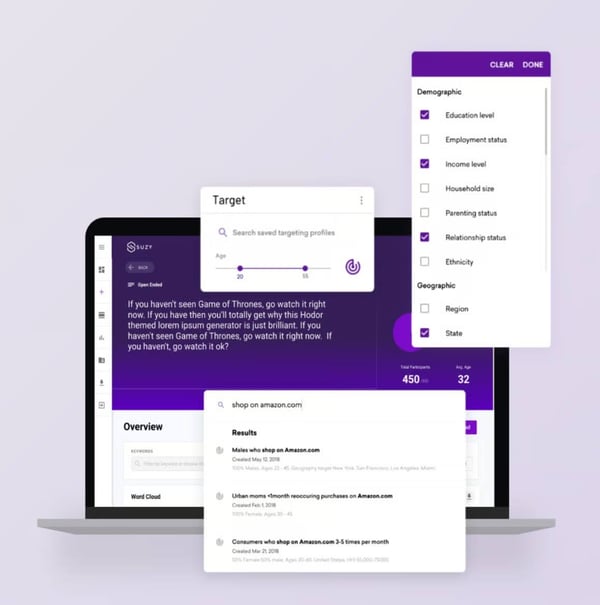
G2 reviewers describe the managed respondent panel as valuable because it allows teams to recontact audiences without maintaining a proprietary panel, supporting continuity in insight generation while limiting operational overhead. This capability helps teams maintain consistent access to respondent groups without building or managing their own panels.
Trend Analysis rated 84%, aligning with use cases centered on evaluating alternatives and tracking directional shifts in consumer perception. What I noticed across Suzy’s reviews is that the quant-to-qual workflow is the capability teams come back to most. Reviewers describe identifying a segment in a survey and being back in conversation with those exact respondents within hours, which compresses a research cycle that used to take weeks.
G2 reviewers also emphasize Suzy’s high-touch customer experience and collaborative support model. Teams frequently describe a close, partner-like relationship with account representatives, which helps accelerate problem resolution and ensures the platform evolves in alignment with user needs. Teams consistently describe this partnership approach as a meaningful contrast to the more transactional support models common elsewhere in the category.
G2 reviews also signal that Suzy’s product roadmap visibility reinforces confidence in the platform’s future evolution. G2 users note that ongoing product improvements are shaped by customer feedback, which helps teams feel assured that Suzy will continue to meet changing research needs rather than requiring frequent tool replacement or repositioning.
Teams can launch surveys quickly with minimal setup time. Ready-to-use templates cover common research scenarios, which means teams do not need to build study designs from scratch every time. G2 reviewers consistently describe the design process as intuitive enough for non-researchers, allowing marketing and brand teams to run studies independently without relying on a dedicated insights specialist.
Suzy’s emphasis on guided workflows and rapid execution sets a boundary for teams that need highly programmable or multi-stage research designs. G2 reviewers note that for brand, marketing, and concept testing needs, the workflow delivers results quickly and reliably without requiring specialist programming knowledge.
A few recurring themes in G2 reviews suggest that survey programming flexibility has boundaries worth noting, particularly for teams that need fine-grained control over question attributes, character limits, or survey design as a brand experience. For projects where the survey itself serves as a client-facing or heavily branded interaction, teams sometimes find the customization options narrower than those that dedicated design-led platforms offer. For standard brand, concept, and consumer testing workflows, however, the existing structure handles most day-to-day needs reliably.
Overall, Suzy’s value is most apparent for brand, insights, and marketing teams operating in fast-moving consumer categories, where speed, directional clarity, and repeatable access to engaged audiences outweigh the need for highly customized research design. In those environments, Suzy’s strengths in rapid comparison, trend analysis, and managed respondent continuity continue to differentiate it within the brand intelligence landscape.
What I like about Suzy:
- It’s an integrated quant-to-qual workflow, allowing teams to identify key audience segments and then recontact the same respondents for deeper qualitative insight without switching tools.
- Reviewers consistently highlight the managed respondent community, which removes the operational burden of maintaining a proprietary panel while still enabling repeat, on-demand consumer research.
What G2 users like about Suzy:
“I like Suzy for seamless cross-team collaboration and actionability. It’s designed for action, not just data collection, with intuitive visual dashboards that are easy to understand for non-researchers like executives, marketers, and product managers. The initial setup was relatively simple and convenient.”
– Suzy review, Terry W.
What I dislike about Suzy:
- Some G2 users note that Suzy’s guided, speed-focused workflows are less suited for highly programmable or deeply customized research designs, which may matter for specialized research teams, though it handles most brand and marketing research needs well within those boundaries.
- Survey programming flexibility has limits around question attributes and design customization. The quant-to-qual workflow and managed respondent panel deliver research speed and audience continuity that design-led platforms rarely match.
What G2 users dislike about Suzy:
“For projects where the survey experience itself is a key brand touchpoint, we use a more design-centric tool (like Typeform) and may import data elsewhere, losing Suzy’s integrated workflow.”
– Suzy review, Elizabeth J.
9. Audiense: Best for audience segmentation and community intelligence
Audiense focuses on translating social conversation data into structured insights about audience traits, behaviors, and underlying motivations.
Audiense enables structured audience segmentation and side-by-side comparison across multiple audience attributes. Teams commonly use it to cluster audiences based on interests, followed accounts, locations, and socio-demographic signals, enabling a more structured view of who is driving specific conversations. Audiense is frequently positioned as the layer that turns conversation volume into audience insight.
Audiense brings qualitative enrichment to brand intelligence workflows. G2 reviews frequently reference the IBM Watson personality integration as a way to move beyond surface attributes into traits, affinities, and communication styles. That added context supports more informed messaging decisions, influencer identification, and audience prioritization. Reports are often described as quick to generate and easy to share, which reduces the operational gap between analysis and stakeholder communication.
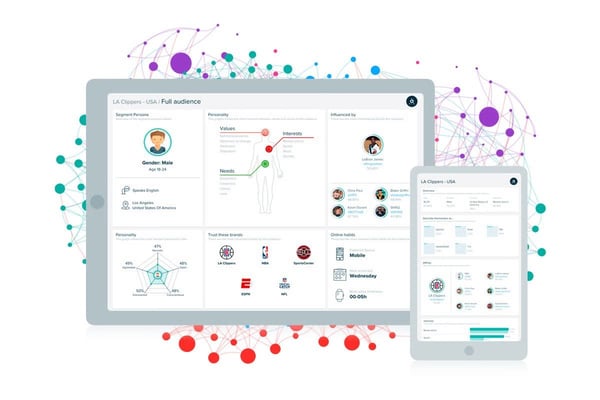 Support responsiveness and overall usability also come through as consistent positives. With an ease of use score of 94% on G2, the interface handles complex audience data without heavy onboarding, supported by documentation that clearly explains data sourcing and methodology.
Audience reports are quick to set up and typically complete within minutes, giving teams fast access to segmented insight without long processing waits. For brand and strategy teams that need to move from a research question to a client-ready output on short notice, this turnaround reduces a common bottleneck in audience analysis work. G2 reviewers note that exports are visually clean and structured well enough to share directly with stakeholders without additional formatting.
Understanding who engages with competitor brands is as straightforward as analyzing your own audience. Teams use this to map overlaps, identify untapped segments, and understand how different competitor audiences differ in interests and behavior. G2 review patterns mention this side-by-side capability as particularly valuable during campaign planning, when knowing the competitive audience landscape directly shapes targeting and messaging decisions.
Demographic data alone rarely explains why an audience behaves a certain way. Audiense goes further by surfacing interests, media habits, influencer affinities, and behavioral patterns that sit underneath surface-level attributes, consistent with its trend analysis score of 85% on G2. While evaluating G2 users’ reviews, I found that this depth supports more informed decisions around content strategy, influencer selection, and brand positioning than standard demographic profiling allows.
The platform derives insights primarily from publicly available data on X, which shapes how comprehensively certain audiences can be represented. Teams researching brands or topics with limited X presence may find coverage thinner than expected for those specific use cases. G2 reviewers note that for audiences actively engaged on the platform, the depth and accuracy of segmentation hold up well and provide a strong directional foundation for audience strategy.
Processing time increases when running analyses across very large audience sets or highly complex segmentations. The depth of behavioral, interest-based, and personality insight the platform produces from those analyses gives teams a structured and actionable view of audience composition that faster but shallower tools do not deliver.
Audiense fits best as a focused brand intelligence companion for teams that want to understand the audiences behind online conversations rather than track conversation volume alone. It is particularly relevant for marketing, insights, and strategy teams that need structured views of audience composition, personality traits, and comparative segments to inform decisions. For organizations that value shareable, research-led audience intelligence over raw social listening, Audiense is well-positioned to deliver structured insight without custom research overhead.
What I like about Audiense:
- It enables deep audience segmentation and comparison based on interests, followers, demographics, and behavior, making it easier to understand who is driving conversations.
- The IBM Watson personality integration adds qualitative depth, helping teams align messaging, positioning, and influencer strategies with audience traits and motivations.
What G2 users like about Audiense:
“I like how flexible the software is and how deep you can explore Audiense.”
– Audiense review, Nicolas S.
What I dislike about Audiense:
- Insights are built primarily from publicly available X data, which can limit how comprehensively certain audiences are represented for brands or topics with lower presence on the platform. For audiences that are actively engaged on X, segmentation depth and accuracy provide a strong directional foundation for audience strategy.
- Processing times extend specifically for large or complex audience sets, which is most noticeable for teams running high-volume analysis. Standard audience reports remain quick to generate and easy to share. The behavioral and personality insight the platform delivers gives teams audience understanding that faster but shallower tools do not.
What G2 users dislike about Audiense:
“Data is sourced in different ways, and it’s challenging to pull together audience profiles for each channel when the data available varies.”
– Audiense review, Tonina T.
Comparison of the best brand intelligence software
|
Software |
G2 rating |
Free plan |
Ideal for |
|
Brandwatch Consumer Intelligence |
4.4/5 |
No |
Enterprise teams needing deep historical data, broad source coverage, and advanced analysis across regions and channels |
|
BrandMentions |
4.9/5 |
Free trial available |
Smaller teams that want fast alerts and straightforward brand mention and reputation tracking |
|
YouScan |
4.8/5 |
Free trial available |
Visual and image-based brand intelligence across logos, images, and social content |
|
Cyble |
4.7/5 |
No |
Brand intelligence combined with threat intelligence, dark web monitoring, and risk exposure analysis |
|
Qualtrics Strategy & Research |
4.4/5 |
No |
Enterprise and mid-market teams running structured, ongoing brand and market research programs |
|
Tracksuit |
4.7/5 |
No |
Ongoing brand health, perception tracking, and long-term brand metrics |
|
Scrunch AI |
4.7/5 |
Free trial available |
Influencer, creator ecosystem visibility, and earned media brand intelligence |
|
Suzy |
4.7/5 |
No |
Brand intelligence through consumer panels, surveys, and on-demand research |
|
Audiense |
4.5/5 |
Free plan available |
Audience segmentation, community intelligence, and understanding who engages with a brand and why |
*These brand intelligence platforms offer a mix of free, trial-based, and custom pricing models, with access varying by feature depth and use case.
Other notable mentions from G2’s Winter 2026 Grid®
The nine platforms above stood out most clearly for their combination of G2 performance, category relevance, and real-world usage across brand, marketing, and communications teams. The following tools also performed well in G2’s Winter 2026 Grid® Report and are worth exploring for teams evaluating a broader mix of brand intelligence platforms and use cases.
- Sellm: AI-driven market intelligence for tracking buyer sentiment, competitive positioning, and category movement.
- Behavio: Behavioral research platform for measuring audience perception, campaign response, and brand communication effectiveness.
- GetCito: AI visibility monitoring platform focused on how brands appear across ChatGPT, AI search, and generative results.
- Sprinklr Insights: Enterprise consumer intelligence platform for social listening, crisis monitoring, and voice-of-customer analysis at scale.
- Locobuzz: Omnichannel social listening and reputation management platform built for customer engagement and support teams.
Best brand intelligence software: Frequently asked questions (FAQs)
Got more questions? G2 has the answers!
Q1. Which brand intelligence tools provide the most comprehensive insights on brand perception and sentiment?
Tools like Brandwatch Consumer Intelligence and YouScan consistently surface the deepest insight into brand perception because they combine broad source coverage with contextual sentiment analysis. Brandwatch excels at large-scale narrative and sentiment shifts across regions and time, while YouScan adds visual and image-based understanding that captures how brands appear beyond text. Together, these platforms move beyond raw sentiment scores to explain why perception changes.
Q2. How do I compare brand intelligence platforms for social listening and trend detection?
The most useful comparison starts with how well each tool separates signal from noise. Look at source breadth, historical depth, and how trends are clustered and explained. Platforms such as Brandwatch, BrandMentions, and YouScan stand out for consistent trend detection, but they differ in focus. Brandwatch favors strategic trend analysis at scale, while BrandMentions prioritizes fast detection across long-tail web sources.
Q3. What brand intelligence software offers the strongest competitor benchmarking features?
Strong competitor benchmarking depends on structured comparison, not just side-by-side mention counts. Tracksuit, YouScan, and Audiense rate highly here, as they allow teams to compare brand health, audience traits, and sentiment trends within a defined competitive set. These tools help teams understand whether changes are brand-specific or category-wide.
Q4. Which brand intelligence tools integrate with marketing analytics and CRM systems?
Platforms such as Brandwatch Consumer Intelligence, Qualtrics Strategy & Research, and Audiense offer integrations or data export paths that support marketing analytics and CRM workflows. These integrations matter most when brand insight needs to inform campaign analysis, customer engagement, or executive reporting rather than remain isolated within brand teams.
Q5. How do I evaluate brand intelligence solutions for real-time alerts and reputation management?
Focus on alert relevance, speed, and actionability. BrandMentions is frequently chosen for fast mention detection and reputation monitoring, while Cyble stands out where real-time alerts need to trigger takedowns or security response. The best tools notify teams early and provide enough context to assess severity quickly.
Q6. What features should I prioritize when selecting brand intelligence tools for global brands?
Global brands should prioritize multilingual coverage, geographic accuracy, historical depth, and scalability across regions. Tools like Brandwatch and YouScan are commonly selected because they support multi-market tracking without fragmenting insights. Consistency across regions matters more than raw volume when teams need a unified global view.
Q7. How do I assess reporting and visualization capabilities in brand intelligence platforms?
Look at how easily insights can be shared and understood by non-technical stakeholders. Platforms such as Tracksuit, Qualtrics Strategy & Research, and Brandwatch are often praised for dashboards, exports, and reporting clarity. Strong visualization reduces friction between insight generation and decision-making.
Q8. Which brand intelligence tools support product launch and campaign impact analysis?
Campaign and launch analysis requires clear before-and-after measurement. Brandwatch and Qualtrics Strategy & Research are commonly used for this purpose: Brandwatch for narrative and sentiment shifts, and Qualtrics for concept testing and rapid campaign feedback tied to brand and messaging performance.
Q9. What should I ask about data sources and coverage when choosing brand intelligence software?
Ask which channels are included, how often data updates, and where coverage is limited by platform rules. Tools like YouScan and BrandMentions differentiate through access to less-covered sources such as visual platforms, forums, or niche sites. Understanding source gaps upfront prevents false confidence later.
Q10. How do I compare brand intelligence solutions on scalability and customization?
Scalability depends on how well a platform handles growth in brands, regions, and stakeholders without breaking workflows. Brandwatch and Qualtrics Strategy & Research scale well for complex organizations, while Tracksuit favor structured, cost-efficient scaling. Customization should support clarity, too much flexibility without governance can slow teams down, rather than help them move faster.
Turning brand signals into direction
The decision rarely comes down to features. It comes down to what your team actually needs to stop guessing: faster risk detection, cleaner competitive context, or insights that leadership can act on without a briefing call to decode them. Start there, not with a feature matrix.
Before committing, run a focused evaluation against your live workflows. Pull a recent brand moment, a campaign launch, a reputational spike, a competitor move, and test whether a platform’s output would have changed how your team responded. If it weren’t, the tool wouldn’t solve the right problem.
Looking ahead, a few shifts are worth building into the buying decision now. AI-generated content makes it harder to know what people actually think. Visual monitoring across images and video is quickly becoming the norm. And stricter privacy laws are creating problems for platforms that depend on outside data sources.
Brand intelligence that holds up over time is built on consistent methodology, not just broad coverage. The platforms worth investing in will be the ones that grow more useful as your brand complexity increases, not ones that require constant reconfiguration to keep pace.
Want broader coverage of how your brand shows up in the news? Explore media monitoring software on G2.


💸 Earn Instantly With This Task
No fees, no waiting — your earnings could be 1 click away.
Start Earning
