


Although it’s celebrating its 40th anniversary this year, The Legend of Zelda always feels like it’s a little younger than it looks. It has successfully maintained its youthful spirit in the face of an ever-changing industry, and yet one aspect of the franchise that seems to always be in flux is what is often collectively referred to as the Zelda formula.
8 Changes We Want to See in The Legend of Zelda: Ocarina of Time Remake
These are changes we want to see implemented in The Legend of Zelda: Ocarina of Time Remake.
It was refined and perfected during the 1990s, and for a long time, the Zelda formula was an integral part of the franchise’s output. It had almost become a character in itself, and expected to appear in some form during every new game. Despite the rock solid foundation, Nintendo would seek to alter everything with 2017’s Breath of the Wild.
With the announcement of a remake of Ocarina of Time, however, Nintendo has decided that it’s time to bring the classic formula back to the forefront. Even as someone who loves Breath of the Wild, this is tremendously exciting, as I firmly believe the classic Zelda formula is one that we desperately need today.
The Key Ingredients

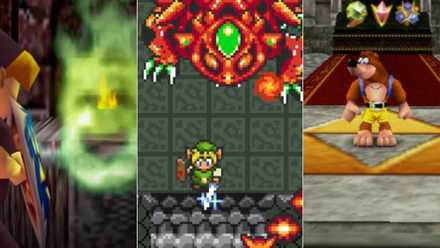
Even as far back as the original Zelda game in 1986, you can see the pieces of the formula falling into place. Exploring an overworld, finding a dungeon, then using an item to either defeat a boss or escape was crucial. It was the secret sauce that made that original game as special as it was.
Even today, despite that classic game being eclipsed by other games in the franchise, it was the origin point for so much of the classic Zelda formula. I recently replayed the entire game via Nintendo Switch Online, and I was blown away by how well it holds up. There’s so much of that game that you can feel in modern Zelda.
Moving forward, Nintendo would focus in on the parts of the game that really worked successfully. They were correct in their assessment of what worked, and they would assemble a sort of signature recipe to take with them in the decades to come.
Refining the Adventure

During the 1990s and 2000s, Nintendo would use their experience on the original Zelda game to sharpen the formula. They were also smart enough to not make it so rigid, which meant that Zelda games were able to accentuate parts, while ignoring others, depending on what that particular game needed.
What’s so surprising to me is that the formula is actually rather simple, relying on an overworld with dungeons dotted across the land. Those dungeons are usually gated by keys or story progression, as well. Once inside a dungeon, that’s when the formula starts to really take shape.
Dungeons are generally multi-level labyrinths, either focusing on puzzle solving or combat. No matter what the focus of the dungeon, the game is constantly leading you to find small keys or solve a puzzle to gain access to its deeper levels. Some sort of special item is the goal, as it will often allow the player to reach a new location or play a major part in defeating the boss. Or both.

Even as far back as the original Zelda game in 1986, you can see the pieces of the formula falling into place.
This would become the basis for nearly every Zelda game moving forward. Each game would add its own unique twists, but from roughly 1993 to 2011, the Zelda formula was a staple. It was almost comforting. No matter how strange the industry got, you knew a Zelda game was just around the corner, and that was always enough to keep me happy. It still is.
The End of the Road

After the release of Skyward Sword in 2011, Zelda producer Eiji Aonuma had some big plans for the franchise moving forward. The next mainline Zelda game was going to be different. Along the way, that would become a 2017 launch title for the Nintendo Switch, known as The Legend of Zelda: Breath of the Wild.
There were elements of the classic formula, but by and large, it was doing its own thing. Due to the mammoth success of Breath of the Wild, the Zelda franchise had seemingly given up on the old formula. That was clear when the follow-up to Breath of the Wild, Tears of the Kingdom, became the focus for Aonuma and the team as the next mainline game.
It honestly felt like the nail in the coffin for the formula. Not many Zelda games get direct sequels, but I think most of us were expecting the next game to be something different, and it just wasn’t. In fact, Nintendo doubled down on that with Tears of the Kingdom, further pushing the Zelda formula into the shadows. Even Aonuma himself said that they had stretched the concept thin, and didn’t anticipate it returning to a mainline game anytime soon, if ever.
While I love Breath of the Wild and tolerate Tears of the Kingdom, I can’t lie. I was incredibly disappointed to see the old formula go away. It didn’t make me love Breath of the Wild any less, but I found myself longing for what the franchise used to be. In the years since, Nintendo has leaned hard on what Breath of the Wild started.
It wasn’t entirely unwarranted, as it is the best-selling game in the franchise with a whopping 34 million units. It became the path forward for the franchise. And while Aonuma has suggested the next game will be different, the open-ended nature of it is likely going to be at the center of the game’s development.
Return of the King

Following the launches of Breath of the Wild and Tears of the Kingdom, it seemed like the classic Zelda formula was gone forever. Nintendo had seemingly moved on, and Aonuma was adamant that they weren’t going back. Or, so it seemed.
In June of this year, Nintendo revealed a long-rumored remake of Ocarina of Time. Along with the announcement of that remake, Nintendo made it clear that they were retaining the classic gameplay. If you follow that to its natural conclusion, then the classic Zelda formula will be along for the ride. I can’t overstate how happy I am to hear that.
No matter how strange the industry got, you knew a Zelda game was just around the corner, and that was always enough to keep me happy.
I understand Nintendo and Aonuma’s desire to do something different. It’s part of the DNA of the series, as it has reinvented itself multiple times over the years. That being said, it’s been over a decade since we’ve seen the classic formula in action. Ever since Skyward Sword in 2011, that formula has been put on the back burner.
A part of the reason Nintendo abandoned it was because they felt like they had done everything that was possible with it. In a way, I suspect that might be true, but as they say, absence makes the heart grow fonder. I’ve always said the classic Zelda formula was a fertile playground for game design, and even if Nintendo is only bringing it back for a one-night encore for the Ocarina remake, there’s so much developers can learn from this satisfyingly simple formula.

10 Zelda ROM Hacks that are Basically New Games
Your favorite classics rebuilt from the ground up!

The Legend of Zelda: Ocarina of Time

9.5/10
- Released
-
November 21, 1998
- ESRB
-
E10+ for Everyone 10+: Animated Blood, Fantasy Violence, Suggestive Themes
- Developer(s)
-
Nintendo
- Publisher(s)
-
Nintendo
- Engine
-
Zelda 64 Engine


💸 Earn Instantly With This Task
No fees, no waiting — your earnings could be 1 click away.
Start Earning
