


Enterprise ride-sharing decisions rarely fail because employees dislike the app. They fail because expenses don’t reconcile, travel policies aren’t enforced, and finance teams lose visibility into trip spending.
I’ve spent considerable time evaluating the best ride-sharing software options on the market, and what stands out is the operational gap. The difference between a platform that prevents these failures and one that quietly compounds them rarely surfaces in a demo or a procurement checklist.
That’s not a niche problem in a niche market. Ride-sharing globally was valued at $144.10 billion in 2025 and is projected to reach $170.32 billion in 2026. At that scale, more vendors means more feature claims and more platforms that hold up in a sales conversation but not in a quarterly audit. I evaluated these tools by analyzing verified G2 reviews at scale and cross-referencing G2 Grid Report data to see how each platform performs under real operational conditions, not just in ideal use cases. The platforms that earn their place here, Lyft Business, Uber for Business, Ola Corporate, Careem for Business, and MoveInSync ETS, give administrators the controls, dashboards, and data they need to run a mobility program without constant manual intervention.
5 best ride-sharing software for 2026: My top picks
- Lyft Business: Best for corporate ground transportation and centralized billing
Centralized ride management platform for employee and guest transportation, with automated expensing and real-time oversight. (Pricing is based on actual rides ) - Uber for Business: Best for global corporate mobility with no upfront commitment
All-in-one platform for managing business rides, meals, and local deliveries across 70+ countries. (No upfront costs; pay per trip) - Ola Corporate: Best for cost-effective corporate ride management at scale
Corporate ride management platform with cashless booking, automated invoicing, and 24/7 availability. (No upfront costs; pay per trip) - Careem for Business: Best for corporate mobility across multi-city operations
Ride-hailing and delivery management platform built for businesses managing employee travel across multiple cities. (Pricing based on usage) - MoveInSync ETS: Best for large-enterprise employee commute management
SaaS platform for end-to-end employee transportation scheduling, routing, tracking, and compliance. (Pricing available on request)
*These ride-sharing software tools are top-rated in their category based on G2’s Winter 2026 Grid Report and market reputation.
5 best ride-sharing software I recommend
If G2 reviews taught me anything about this category, it is that the businesses with the least travel-related chaos made one shift early: they stopped treating ride-hailing as an employee perk and started treating it as an operational input that needs the same controls as any other managed spend category.
The platforms worth your attention do the unglamorous work well. Driver allocation, automated expense coding, policy guardrails that actually trigger, and dashboards your finance team can read without a tutorial. If those foundations are shaky, everything else, including the slick booking interface and the account manager promises, becomes noise.
Your organization’s profile will shape which platform fits. Smaller teams need something employees can adopt without hand-holding, and finance can reconcile without a dedicated travel manager. Mid-market teams typically need tighter policy controls and cleaner integration with existing expense tools. If you’re running a large-scale daily commute program, you need route optimization, fleet coordination, and compliance data that feeds into workforce planning, not just a trip log.
I’ve matched each platform in this list to the operational context where it performs best. Use that framing to find your fit rather than defaulting to the biggest name.
How did I find and evaluate the best ride-sharing software?
My shortlist started with G2’s Winter 2026 Grid Reports for ride-sharing software, using verified user satisfaction scores and market presence data across small business, mid-market, and enterprise segments to identify which platforms were worth examining closely.
From there, AI-driven analysis across hundreds of verified G2 reviews helped surface what repeatedly matters in real-world corporate mobility programs: billing reliability, policy control depth, dashboard usability, driver availability, ride scheduling accuracy, and expense workflow integration. This made it clear which platforms actually reduce administrative load and which quietly create more of it.
I have not personally used every platform evaluated here. My findings are cross-referenced against operational feedback from travel managers, finance teams, and ops leads who run corporate mobility programs daily. Visuals and product references are sourced from G2 vendor listings and publicly available product documentation.
What makes the best ride-sharing software worth it: My criteria
What separates a useful evaluation framework from a generic feature checklist is specificity. The criteria below are built around what G2 reviewers actually escalated, not what vendor marketing emphasizes.
- Centralized billing and expense integration: The most repeated friction in G2 reviews across this category is billing. Platforms that route all ride costs to a central account, auto-code expenses, and sync with tools like SAP Concur or Expensify eliminate the reimbursement loop that slows finance teams. When billing requires manual reconciliation, the cost is not just time. It is accuracy, and it compounds every reporting cycle.
- Policy controls: The best platforms let you define rules around ride eligibility, cost caps, time windows, and geographic boundaries, then enforce them automatically. A policy tool that can be bypassed or that requires manual approval for every exception does not reduce risk. It moves the problem to a different team.
- Dashboard visibility and reporting depth: Administrators need real-time visibility across the program: trip status, spend trends, rider activity, and exception reporting, all accessible without building custom exports. Platforms with weak dashboards force travel managers to work around the tool rather than through it.
- Ride scheduling and driver reliability: On-demand booking is only part of the requirement for corporate programs. If your team runs regular commutes, client pickups, or event logistics, schedule adherence matters as much as driver availability. G2 reviewers consistently flag platforms where scheduled rides run inconsistently, and gaps in coverage during peak hours or in non-urban markets compound over time.
- Analytics and spend intelligence: Beyond standard reporting, strong platforms surface actionable insight: which routes are over-budget, which teams are generating exceptions, and where surge pricing hits hardest. Platforms with analytics depth give mobility managers the information they need to adjust programs before problems escalate.
After researching more than 20+ platforms, I finalized 5 best ride-sharing software that stood out across the areas that matter. The tools below represent the strongest options across a range of operational contexts. Where they differ matters more than where they overlap.
To appear in this guide, a tool must:
- Provide centralized ride booking and billing management for corporate accounts
- Support policy controls, spend limits, or administrative oversight features
- Integrate with or support expense reporting workflows
- Offer trip tracking, reporting, or dashboard visibility for program administrators
This data was pulled from G2 in 2026. Some G2 reviews may have been edited for clarity.
1. Lyft Business: Best for corporate ground transportation and centralized billing
Lyft Business sits at the consumer-familiar end of the corporate ride-sharing spectrum. The business layer adds centralized billing, ride vouchers, and a Concierge feature that lets administrators book rides for guests and clients who do not have the app. For organizations managing both employee and guest travel on one account, the combined scope is broader than most platforms at this price point offer.
Getting a Lyft Business account configured is straightforward on the admin side. Ride eligibility rules, spend limits, and billing preferences are set once at the account level and enforced from there. Administrators are not manually managing individual configurations or chasing exceptions after the fact. For teams that need a program running without a long IT implementation, that setup simplicity is a real practical advantage.
What struck me when going through the review data is how consistently receipt management came up as a genuine operational win. Every ride receipt is consolidated in one place, with the trip purpose, cost, and date captured automatically. The admin dashboard scores 92% on G2, giving program managers a clear view of spend and ride history without chasing individual submissions.
If you are still running corporate travel on rental cars, taxis, and third-party brokers, the savings gap is worth paying attention to. I kept seeing the same thing across reviews: organizations cutting meaningful amounts from business travel simply by switching to on-demand rides billed to a central account. The promotional offers and card-linked discounts compound that further across high-frequency programs.
Drivers on the Lyft Business platform are consistently described as friendly and attuned to the corporate rider experience, with ride ratings scoring 92% on G2. That matters more than you might think for client-facing trips, where the driver’s conduct reflects directly on your organization. For programs where employee and guest experience carries reputational weight, that consistency is a practical differentiator.
Policy compliance on Lyft Business is managed at the account level, not left to individual riders. Spend limits, ride eligibility rules, and time-window restrictions are configured by administrators and enforced automatically at booking. G2 reviewers consistently highlight these built-in guardrails as the feature that keeps travel spend on track across distributed teams, where manual oversight would otherwise fall short.
Scheduling on Lyft Business holds up well for planned client pickups, event logistics, and recurring employee travel, with ride scheduling scoring 91% on G2. What makes it genuinely useful is the Concierge function. Admins can book rides for guests and patients who do not have the app at all, and that extends the platform’s reach into use cases most corporate tools never touch.
Surge pricing is the one variable that can catch you off guard if your travel program runs on tight timing. G2 reviewers note that peak-hour and high-demand periods push fares up in ways that make per-trip costs harder to predict. The good news is that centralized billing means every spike is captured, categorized, and visible to whoever owns the travel budget, so nothing slips through unaccounted.
If your team is spread across smaller cities or less dense markets, driver availability is worth factoring into your evaluation. A recurring theme in reviews is that wait times stretch and coverage thins outside major metros, which can disrupt planned travel for reps operating away from city centers. Where Lyft Business holds up consistently is in urban markets, where the driver network is deep enough that reliability rarely becomes a conversation.
At the operational level, Lyft Business delivers exactly what it promises. A platform employees already know, controls administrators can actually use, and billing that does not require anyone chasing receipts. For programs where adoption and expense accuracy are the priority, I’d back this one without hesitation.
What I like about Lyft Business:
- Centralized receipts with trip purpose and cost captured automatically means finance teams stop chasing submissions entirely.
- The Concierge function lets admins book rides for guests and clients who do not have the app, extending the platform well beyond standard employee travel.
What G2 users like about Lyft Business:
“ We were able to process the Lyft voucher quickly and check if the customer had already used it or if a Lyft voucher had been issued to their account.”
– Lyft Business review, Mark Robert J.
What I dislike about Lyft Business:
- Surge pricing during peak hours makes per-trip costs harder to predict, hitting hardest for programs where travel timing is fixed. Centralized billing captures every fare spike, so spend stays fully visible to whoever owns the budget.
- Driver availability thins out in smaller cities and non-urban markets, which reps traveling outside major metros will notice. That said, the driver network in urban markets remains deep and consistently reliable.
What G2 users dislike about Lyft Business:
“What I least like about Lyft is that when you reach out to the customer service portal, sometimes they take a little while to respond. I also dislike the price inflation at specific times.”
– Lyft Business review, Jasmine R.
Managing business travel receipts across a distributed team? Read about the best expense management software to keep every trip coded, submitted, and reconciled without the manual back-and-forth.
2. Uber for Business: Best for global corporate mobility with no upfront commitment
Uber for Business is the default most travel managers reach for when mobility needs span multiple geographies, and looking at the numbers, it’s easy to see why. Rides, meals, and local deliveries across 70+ countries and 15,000+ cities, with no upfront costs and no minimum spend required. If you need coverage from day one without a lengthy procurement process, this is where most programs start.
If I had to pick one capability that G2 feedback keeps coming back to on Uber for Business, advance booking would be it. Ride scheduling scores 93% on G2, the highest-rated feature on the platform, and the ability to book rides days ahead and assign them to specific riders removes the coordination overhead that typically falls on assistants or office managers, particularly for client pickups, airport transfers, and team logistics.
Managing mobility across multiple geographies is messy, and most platforms make it messier. What I kept coming across in G2 review patterns is that programs spanning different cities and countries treat Uber for Business as the one platform where driver availability does not flinch, no matter where you are sending your team. That consistency alone removes the need to stitch together separate vendors across markets, which is a bigger operational win than it sounds.
I think expense integration is one of those things that sounds routine until you see how much time it actually saves. The SAP Concur and Expensify integrations on Uber for Business route receipts automatically into expense management systems, no manual uploads, no screenshot workflows, no receipts stuffed into email threads. Users who previously managed reimbursement cycles call this the feature that most directly cuts administrative time. Across high-volume travel programs, automation does not just save hours. It saves sanity.
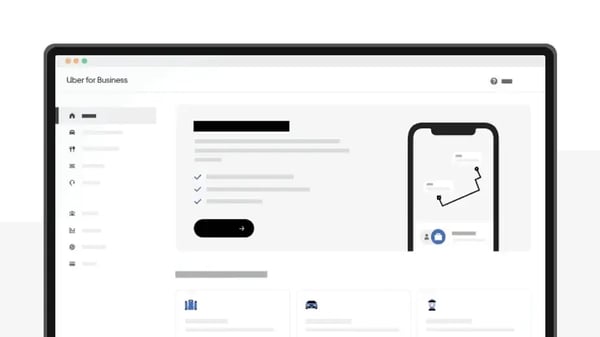
Policy controls and spend visibility give administrators the kind of oversight that actually holds up at scale. Set ride limits by employee, time window, location, and vehicle type, and the platform handles enforcement without manual intervention. Monthly consolidated billing replaces per-trip payment management, and the dashboard puts usage data right in front of you without building a single custom export. I find that combination harder to replicate elsewhere than most people expect.
There is something reassuring about knowing the driver experience will be professional before the ride even starts. Uber for Business delivers that through a pre-verification and rating system that keeps quality consistent across markets, scoring 92% on G2. For client-facing travel, where your organization’s reputation is effectively sitting in that backseat, that reliability matters more than most travel checklists give it credit for.
Sustainability reporting is becoming a line item in corporate travel audits, not just a CSR talking point. Uber for Business tracks CO₂ emissions for every ride directly on the business dashboard, with visibility into low-emission trip totals and average CO₂ per mile. For organizations with ESG commitments or internal carbon targets, that data feeds directly into reporting without a separate tracking layer — and it comes built in, not as an add-on.
The switch between personal and business profiles is easier to miss than you’d expect. G2 reviewers flag accidentally charging personal rides to the business account as a recurring slip, particularly for users who bounce between both accounts regularly. The overall booking experience remains one of the most straightforward in the category, and the habit of switching builds quickly with regular use.
When billing disputes come up, reaching a direct Uber representative takes longer than it should. Several G2 users describe support being routed through intermediaries, which slows resolution on issues that need quick attention. The self-serve dashboard is genuinely well-built, though, handling the bulk of day-to-day admin needs without ever needing to pick up the phone.
Uber for Business wins on reach, integration depth, and procurement simplicity, and for most multi-geography programs, that combination is genuinely hard to beat. If your team needs coverage from day one, expense automation that actually works, and a platform that scales without adding administrative weight, this is where I would start the conversation.
What I like about Uber for Business:
- The SAP Concur and Expensify integrations remove the manual receipt workflow entirely, which is where most corporate travel programs quietly lose hours each month.
- No upfront costs and no minimum spend mean a program can be stood up quickly without a budget commitment, making it easier to pilot before scaling.
What G2 users like about Uber for Business:
“How easy it is for both our team that uses Uber for rides, as well as our admin team. We have a team of about 70 people, and each time someone takes an Uber, our admin gets notified. It has taken out a lot of the admin work for expensing rides.”
– Uber for Business review, Erin T.
What I dislike about Uber for Business:
- The personal-to-business profile switch is easy to miss, and accidental mis-coding of rides comes up more than expected. Once the switching habit is built, the booking experience is smooth and reliable.
- Billing disputes take longer to resolve than they should, with support routed through intermediaries rather than direct account managers. The self-serve dashboard covers most admin needs without needing to escalate.
What G2 users dislike about Uber for Business:
“On the first page, where we look for a ride, we need either a prompt asking if we want to use the Business or Personal account, or you need to change the background colour and add a label for each account. It is very easy to forget you are using your business account and it causes a lot of hassle to get the money back to your employer if you accidentally use it for personal reasons.”
– Uber for Business review, Marcela T.
Per-trip invoicing only goes so far. The best spend management software gives finance teams the controls and visibility to manage the full mobility budget.
3. Ola Corporate: Best for cost-effective corporate ride management at scale
Cost control is where Ola Corporate earns its place in corporate mobility programs. Employees book on a pre-loaded corporate wallet, keeping spend within administrator-set limits before any booking is made. Ride categories are tied to corporate policies, so employees cannot select vehicle types outside of what the program allows. For high-volume programs, removing those decisions from the employee side is where the real savings come from.
Automated invoicing removes the reconciliation step that most high-frequency travel programs quietly lose hours to every month. Employees book on the corporate account, and the expenses are coded and submitted without requiring any action from them after the ride ends. What G2 reviewers from finance and HR teams flag consistently is not just the time saved but the accuracy: when submissions are automatic, the error rate that comes with manual reimbursement cycles simply does not show up in the monthly close.
I came to appreciate just how much the dashboard does in Ola Corporate once you dig into the reviews. Admins describe clear visibility into ride activity, employee usage, and spend, with the dashboard scoring 88% on G2. Program managers use it to spot usage patterns, flag outliers by team or route, and adjust ride policies before a cost problem has time to compound.
One size has never fit all in corporate travel, and Ola Corporate does not pretend otherwise. Employees pick their vehicle category based on what the trip requires: economy for the daily commute, something more comfortable when a client is involved. Preferences score 86% on G2, reflecting how consistently that flexibility lands. For organizations managing a mix of routine and client-facing travel, giving employees that kind of control removes a friction point most fixed-vehicle programs never even acknowledge.
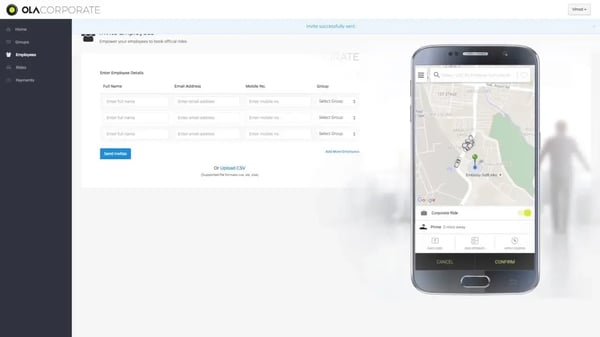
I’ll admit, 24/7 availability is one of those things that sounds standard until you actually need it at 2 am. Reviews from organizations running night shifts and non-standard working hours describe Ola Corporate as dependable precisely when other transport options thin out. Late-night drops and early-morning pickups come up repeatedly as use cases where the platform holds up, where alternatives simply do not show up.
Safety features draw consistent mention across reviews, and the numbers back that up. Ride ratings reach 86% on G2, and the emergency alert button, background-checked drivers, and GPS tracking give employees and administrators a genuine baseline of security. For organizations managing female employee travel and late-night commutes, I’d say these are not optional extras. They are the reason some teams chose this platform in the first place.
The corporate travel desk takes the booking burden off employees entirely. Admin teams can manage rides on behalf of their people, which reviews from centralized travel programs describe as especially useful for new joiners and group travel to events or off-site meetings. No coordination chaos, no individual booking overhead, just rides sorted before anyone has to ask.
Driver cancellations after ride acceptance are the most disruptive thing you’ll run into on this platform. G2 feedback points to drivers declining trips once they see the destination or corporate payment mode, which throws off planned travel at the worst possible moments. On the other hand, Ola Corporate’s 24/7 availability means the network stays open around the clock, and rebooking options are consistently within reach.
Fares on the corporate account run higher than standard Ola bookings for equivalent routes, from what I read in G2 reviews. Budget-conscious teams tend to notice this most when comparing per-trip costs across platforms. What the platform delivers in return is fully automated invoicing and reimbursement. That alone removes the administrative overhead most high-frequency travel programs quietly accumulate over time.
Ola Corporate is built for the kind of travel program that runs hard and runs often, and if yours fits that description, pay attention. Cashless travel, automatic invoicing, round-the-clock availability, and safety features that hold up when the workday does not end at five. For teams where reimbursement overhead and employee safety during non-standard hours sit at the top of the priority list, this one delivers exactly where it needs to.
What I like about Ola Corporate:
- The corporate wallet and automatic invoice routing eliminate the reimbursement loop entirely, which is where most high-frequency commute programs generate the most administrative noise.
- The 24/7 availability, combined with built-in safety features like emergency alerts and GPS tracking, makes it a practical fit for organizations managing employee travel outside standard business hours.
What G2 users like about Ola Corporate:
“Ola Corporate provides a reliable and convenient way to book rides for work-related travel, eliminating the need for businesses to rely on multiple taxi services or reimburse employees for their transportation expenses. The platform’s focus on safety features, such as GPS tracking and driver background checks, helps to provide peace of mind for both the employer and employee. Ola Corporate’s flexible payment options, including billing accounts for corporate customers, make it easier for businesses to manage their transportation expenses and simplify their accounting processes.”
– Ola Corporate review, Raj P.
What I dislike about Ola Corporate:
- Some drivers drop accepted rides once they see the destination or payment mode, which can throw off carefully planned travel. However, round-the-clock availability keeps the network open and alternatives close by.
- Per-trip costs sit higher than standard Ola bookings, and teams watching spend closely will notice. The fully automated billing flow takes a significant chunk of admin work off the table.
What G2 users dislike about Ola Corporate:
“I dislike the cancellation part. Drivers denied for the destination, they keep asking about the destination, like where do you want to go, and then they cancel the ride. I have to bear that amount most of the time.”
– Ola Corporate review, Kanu C.
4. Careem for Business: Best for corporate mobility across multi-city operations
What sets Careem for Business apart from most platforms in this category is its regional depth, and in the markets it serves, that is not a small advantage. Coverage spans more than 70+ cities in 10 countries, including markets where other platforms have never shown up. Rides, food delivery, and parcel dispatch all on one corporate account, no vendor juggling, no market gaps, no explaining to your CFO why you need three different mobility tools.
Ask any Careem for Business reviewer what stands out first, and captain professionalism comes up fast. Drivers are consistently described as courteous, well-mannered, and genuinely familiar with local routes, with ride ratings landing at 87% on G2. In markets where navigation is unpredictable and local knowledge is everything, a captain who knows the terrain is worth more than any feature on the booking screen.
The rewards and loyalty program draws attention that few platforms in this category generate, and frankly, it deserves it. Reviews describe a points system where every ride earns credits redeemable for discounts. Some reviewers call out the option to donate points to social causes as a differentiator that lands particularly well with organizations carrying sustainability or CSR commitments. I would put the high level of active participation on the shortlist of reasons to look at this platform twice.
I always appreciate when a dashboard actually does what it says on the tin, and on Careem for Business, it does. Admins and finance contacts describe accurate geo-tracking, instant invoice availability, and a clear ride history that simplifies end-of-period reconciliation. The dashboard scores 84% on G2. For finance teams that need trip data without chasing individual employees for receipts, that structure removes the manual bottleneck most programs quietly struggle with.
Advance scheduling on Careem for Business removes the last-minute scramble that derails time-sensitive travel in busy markets. It lets you lock in rides for airport pickups, client visits, and recurring employee commutes well ahead of time, with ride scheduling scoring 83% on G2. Corporate users highlight that pre-scheduled rides take the last-minute scramble out of time-sensitive travel in busy markets. Frankly, once you have run a program this way, going back feels unthinkable.
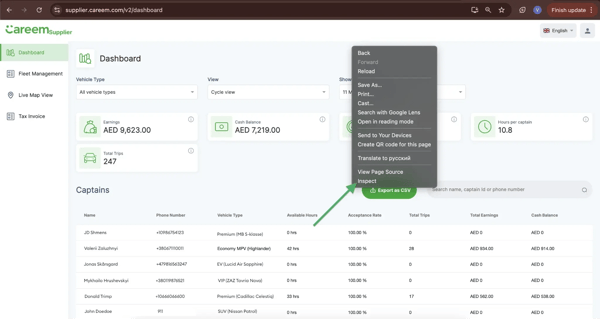
The Careem Pay wallet gives employees and administrators a clean, controlled way to manage travel spend across rides, food orders, and deliveries. No paying out of pocket, no reimbursement claims, no awkward conversations about who owes what. In markets where corporate card acceptance is inconsistent, that wallet model removes the kind of payment friction that quietly derails travel programs more often than anyone admits.
I cannot think of a more important feature set for organizations managing female employee travel and late-night commutes. Real-time tracking, live trip location sharing with a colleague or family member, and background-checked captains give HR and ops teams a safety baseline that G2 reviews consistently describe as meaningful. For travel programs that extend beyond standard office hours, that combination of tracking and driver verification is not just reassuring. It is the reason some teams chose this platform over everything else.
Last-minute captain cancellations are a real frustration, and you’ll feel it most when travel is time-sensitive. Across reviews, drivers declining trips after seeing the destination or payment method is the friction that surfaces most consistently on the platform. Careem’s pre-verified captain network and advanced scheduling give ops teams enough forward visibility to plan departures with confidence.
Peak-hour fares surge steeply, making it harder to lock down accurate cost estimates for programs running on fixed budgets. G2 users highlight this most for travel that cannot be shifted to quieter windows. What stays consistent regardless is Careem’s regional coverage, with rides available across many cities even during periods when pricing is at its highest.
For organizations operating across the Middle East, South Asia, or Africa, Careem for Business is not just another option on the shortlist. It is the shortlist. The regional depth, consolidated billing, loyalty program, and safety features combine into something mid-market teams managing multi-city travel will find genuinely hard to replicate elsewhere. I picked up on this early in the review data, and the more I looked, the more the case built itself.
What I like about Careem for Business:
- The multi-service model covering rides, food, and parcel delivery from a single corporate account removes the need to manage separate vendor relationships for different operational needs.
- The rewards program with redeemable points and CSR donation options is a differentiator that adds visible value to employee travel programs without adding administrative complexity.
What G2 users like about Careem for Business:
“The best thing about Careem is you get a variety of ride options to choose from, which you can select as per your budget and comfort. Also, the reward program of Careem is excellent, as you earn points on every ride, which you can redeem for discounts in the future.”
– Careem for Business review, Asmer K.
What I dislike about Careem for Business:
- Captains occasionally drop accepted rides at the last minute, which stings when the schedule has no room to flex. The pre-verified network and advanced scheduling keep things moving even when it happens.
- Peak-hour fares spike in ways that make budgeting feel like guesswork for time-fixed programs. Though regional coverage across 100+ cities stays solid regardless of where pricing lands.
What G2 users dislike about Careem for Business:
“Peak time and taking advantage of people’s needs at a time of high demand for taxi service, also the high price of waiting time, and the taxis are a long distance from the starting point sometimes.”
– Careem for Business review, Mohammad L.
Knowing what was spent is only half the picture; knowing why it spiked is what lets you adjust. Explore the best analytics platforms to bring that spend intelligence layer to your corporate mobility program.
5. MoveInSync ETS: Best for large-enterprise employee commute management
MoveInSync ETS is purpose-built for organizations running structured, high-volume employee transport programs, and that focus shows in everything it does. Most platforms treat commuting as a subset of broader corporate mobility. MoveInSync treats it as the whole point. End-to-end scheduling, real-time cab tracking, fleet allocation, SOS safety alerts, and seat booking, all from one interface.
I want to be clear about how much the advanced scheduling capability changes things for enterprise commute programs. Transport coordinators describe the ability to lock in cabs up to a month ahead as a core operational advantage for fixed shift patterns, with ride scheduling scoring 89% on G2. The option to copy and paste shift details across team members takes what used to be a logistical headache and turns it into something you can knock out in minutes.
Safety during late-night commutes is not something you can afford to get wrong, and MoveInSync ETS treats it accordingly. Employees monitor cab location, view driver details, and call drivers directly from within the app. The SOS alert function is highlighted consistently in recent reviews, particularly valued by female employees on late-night shifts as a safety layer that support teams respond to quickly.
Ask anyone running a high-volume commute program what keeps them up at night, and driver reliability is usually near the top of the list. On MoveInSync ETS, that particular worry gets taken off the table. Drivers are described as professional and punctual across both standard and late-night shift schedules, with ride ratings at 86% on G2, and the platform’s driver vetting and safety protocols are what make that consistency hold at scale.
I have sat with this one longer than most features in this category, and it earns attention. Employees configure home and office locations, select in and out times, and choose transport mode, all stored for recurring use. G2 reviewers put preferences at 86%, and recent feedback makes it clear this configurability is not just available but genuinely used, reducing the daily friction of booking repeat commutes to a single confirmation rather than starting from scratch every time.
Cancellation flexibility sounds like a small operational detail until your shift runs three hours longer than planned. Employees cancel cab bookings within a defined window before pickup, which reviews describe as genuinely useful when emergencies or shift extensions disrupt planned travel. Advance scheduling paired with last-minute flexibility gives employees real control without creating unpredictability for the transport team. I rarely see that balance executed this well in a commute platform.
Cab booking and office seat selection in the same app sounds like a small convenience until you are managing hybrid attendance across a large enterprise, and then it starts to feel like a revelation. Recent reviews describe using the platform for both on the same day, with an office floor map that makes desk selection genuinely intuitive. For enterprises juggling hybrid attendance alongside transport, that integration removes the daily toggling between separate tools that nobody, and I mean nobody, has time for.
The app takes some getting used to, and new joiners will notice that most during their first few days on the platform. Some G2 reviewers describe the initial navigation as requiring more steps than expected before the layout becomes familiar. However, the scheduling and booking workflows underneath are solid, and once things click into place, daily commute management becomes genuinely quick to execute.
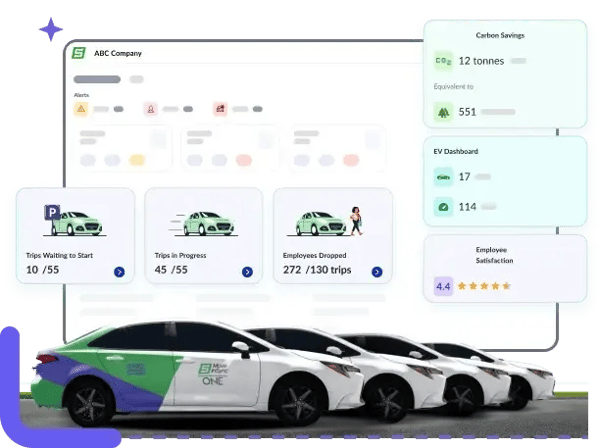
Live trip tracking refreshes slower than most users expect, and if you are someone who checks the map every thirty seconds, you will notice. Reviewers across G2 flag this as a recurring observation rather than an occasional glitch. Driver punctuality on the platform is strong and well-documented, though, so even when the map lags, the cab shows up exactly when it should.
MoveInSync ETS is not trying to be everything to everyone, and that restraint is exactly what makes it exceptional. Enterprises running structured daily commute programs at scale, particularly those with duty-of-care obligations and complex shift patterns, will find nothing else in this category built quite like this. I came away from the review data with one clear conviction: for large enterprise commute programs, this is the one.
What I like about MoveInSync ETS:
- The month-long advance scheduling, combined with last-minute cancellation flexibility, gives transport coordinators reliable program control without creating rigidity for employees managing shift changes.
- The SOS safety alert function and real-time driver tracking address duty-of-care requirements directly, making it a practical fit for enterprises managing female employee travel and late-night shift commutes.
What G2 users like about MoveInSync ETS:
“MoveInSync provides an option to cancel the cab a few minutes before pick-up time, which helped me a lot whenever an emergency occurred or I had to extend my shift. We also get an option to schedule cabs, call the driver, and track them on the app. The application is very user friendly.”
– MoveInSync ETS review, Mary S
What I dislike about MoveInSync ETS:
- The app takes some getting used to, and new joiners will notice it most during their first few days. The scheduling and booking workflows underneath are solid and quick to execute once the layout is familiar.
- Live trip tracking refreshes slower than expected, making it harder to pinpoint the cab location mid-trip. Driver punctuality remains strong across the platform, so the cab tends to arrive on time regardless.
What G2 users dislike about MoveInSync ETS:
“The UI is not that user-friendly. The GPS works, but it is slow and not accurate. There should be a facility that can help to schedule a cab for another colleague in need within the same organization.”
– MoveInSync ETS review, Mritunjay K.
Comparison of the best ride-sharing software
|
Software |
G2 rating |
Free plan |
Ideal for |
|
Lyft Business |
4.2/5 |
No |
Corporate ground transportation with centralized billing and high driver ratings |
|
Uber for Business |
4.4/5 |
No |
Global corporate mobility with no upfront commitment and deep expense integrations |
|
Ola Corporate |
4.3/5 |
No |
Cost-effective corporate ride management for high-frequency employee travel |
|
Careem for Business |
4.3/5 |
No |
Corporate mobility across multi-city operations on a single business account |
|
MoveInSync ETS |
4.5/5 |
No |
Large-enterprise employee commute management with safety controls and advanced scheduling |
*These software products are top-rated in their category, based on G2’s Winter 2026 Grid Report.
Best ride-sharing software: Frequently asked questions (FAQs)
Got more questions? G2 has the answers!
Q1. Which ride-sharing app has the easiest-to-use interface on Android?
Uber for Business and Lyft Business offer intuitive Android apps. They consistently score well for interface simplicity across G2 reviews, with both platforms allowing employees to switch between personal and business profiles within a familiar app they already use. Ola Corporate also draws positive mentions for its lite app version on Android, which is designed for users with limited storage or data.
Q2. Which is the cheapest ride-sharing app for airport rides with upfront pricing?
Uber for Business and Lyft Business both offer upfront fare estimates before booking confirmation, giving travelers a clear cost before committing. Reviewers do not point out a specific app for the cheapest rates, however, for organizations where cost predictability matters more than on-demand flexibility, Ola Corporate’s cashless corporate wallet model keeps per-trip spend under control and visible, without any surprise charges at the end of a journey.
Q3. What’s the difference between the major ride-sharing platforms?
The biggest differences between ride-sharing platforms come down to coverage, pricing, integrations, and business features. Lyft Business leads on satisfaction and driver ratings. Uber for Business leads in global reach and expense integrations. Ola Corporate and Careem for Business serve regional markets with strong cashless billing models. MoveInSync ETS is the specialist choice for large enterprise commute programs.
Q4. Which is the most reliable ride-sharing app so I am not stuck waiting?
Uber for Business operates across most cities globally, which tends to translate to shorter wait times in urban markets. Lyft Business is worth considering for North American programs, where its metro coverage is comparably strong. If your team operates primarily in less dense markets, MoveInSync ETS is worth prioritizing since it’s purpose-built for structured commute programs where scheduled pickups matter more than on-demand availability.
Q5. Which ride-sharing app has the best customer support when trips go wrong?
Lyft Business and Careem for Business receive the most consistent positive mentions for support responsiveness in G2 reviews, with both platforms showing up for resolving trip issues without significant delays. For billing disputes and account-level issues specifically, Lyft Business reviewers on G2 report faster resolution than the category average.
Q6. Which ride-sharing app is the safest to use late at night?
MoveInSync ETS is purpose-built for night shift safety, with SOS alerts, real-time tracking, and post-drop security check-ins specifically cited by female employees in G2 reviews. Careem for Business offers live location sharing with contacts during trips. Both platforms address late-night duty-of-care requirements more directly than general-purpose alternatives.
Q7. Which ride-sharing app has the best driver ratings and background checks?
Lyft Business scores highest on ride ratings in this category at 92% on G2, above the category average. Uber for Business operates a pre-verification system that G2 reviews describe as producing a consistently professional driver experience across markets. Both platforms require background checks as a condition of driver onboarding.
Q8. Which ride-sharing company has the most transparent surge pricing?
Lyft Business and Uber for Business both display upfront fare estimates that account for current demand before booking is confirmed. For organizations where budget predictability is the priority, Ola Corporate’s corporate wallet model gives finance teams a controlled spend environment where admins set the limits and employees book within them, keeping fare variability from becoming a monthly reporting problem.
Q9. Which is the best ride-sharing app for solo female travelers from a safety perspective?
MoveInSync ETS and Careem for Business are the strongest options here based on G2 review patterns. MoveInSync’s SOS alert function and post-trip security check-ins are specifically cited by female employees using the platform for late-night commutes. Careem for Business offers real-time location sharing with trusted contacts throughout the trip, which G2 reviews describe as a meaningful safety layer for solo travel.
Ride smarter, spend less
The ride-sharing category has matured enough that most platforms on the market will work. The real question is no longer whether a platform can manage bookings and generate reports. It is whether it can hold up when your program scales, your finance team runs a quarterly audit, or your ops lead needs to explain a spike in ground transport spend to a CFO who did not budget for it.
The corporate mobility market is not waiting for you to catch up. Spend forecasting, commute analytics, and sustainability reporting are no longer nice-to-haves. They are what serious vendors are building toward, and what serious buyers are starting to demand. When you are talking to vendors, push them on the roadmap, not just the current feature set. A platform that fits your program today but has no clear direction for tomorrow is a short-term fix dressed up as a long-term decision.
The buyers who get this right are honest with themselves before they are honest with a vendor. Where does your setup actually break down? What does finance genuinely need versus what looked good in the demo? Platforms built for enterprise accountability are pulling ahead fast. Know which side of that divide your shortlist sits on before you sign anything.
Want to take your corporate travel program further? Explore travel management software on G2 to find tools that help your team manage bookings and streamline business travel end-to-end.

💸 Earn Instantly With This Task
No fees, no waiting — your earnings could be 1 click away.
Start Earning
