


Starcloud says it has raised $250 million in new funding to support the creation of a constellation of data center satellites powered by Nvidia’s next-generation AI chips.
The Series A extension funding round was led by Manhattan West, with participation from existing investors including Benchmark, EQT, Soma, NFX and 776. Among the new investors joining for this round are Nvidia, Cisco Investments, Cedar Capital, Goanna Capital and Standard Capital.
Founded in 2024, Starcloud is headquartered in Redmond, Wash., and is building production lines for its Starcloud-3 spacecraft at a new 100,000-square-foot manufacturing facility in Woodinville, Wash. The newly announced round brings the startup’s total capital raised to $450 million, with a post-money valuation of $2.3 billion.
Nvidia’s participation in the funding round brings Starcloud’s collaboration with the computer-chip titan to a new level. In November 2025, Starcloud flew Nvidia’s H100 GPU to orbit for the first time. It used the chip to train a large language model called NanoGPT — marking a milestone in space-based AI data processing.
Starcloud plans to equip future satellites with Nvidia’s Space-1 Vera Rubin Module, which Nvidia says will deliver 25 times as much in-space compute capability as the H100. Starcloud’s satellites will serve as an early flight platform for the space-rated chips.
“This fresh capital empowers us to build the infrastructure to launch many more of Nvidia’s most advanced GPUs into space,” Starcloud co-founder and CEO Philip Johnston said today in a news release.
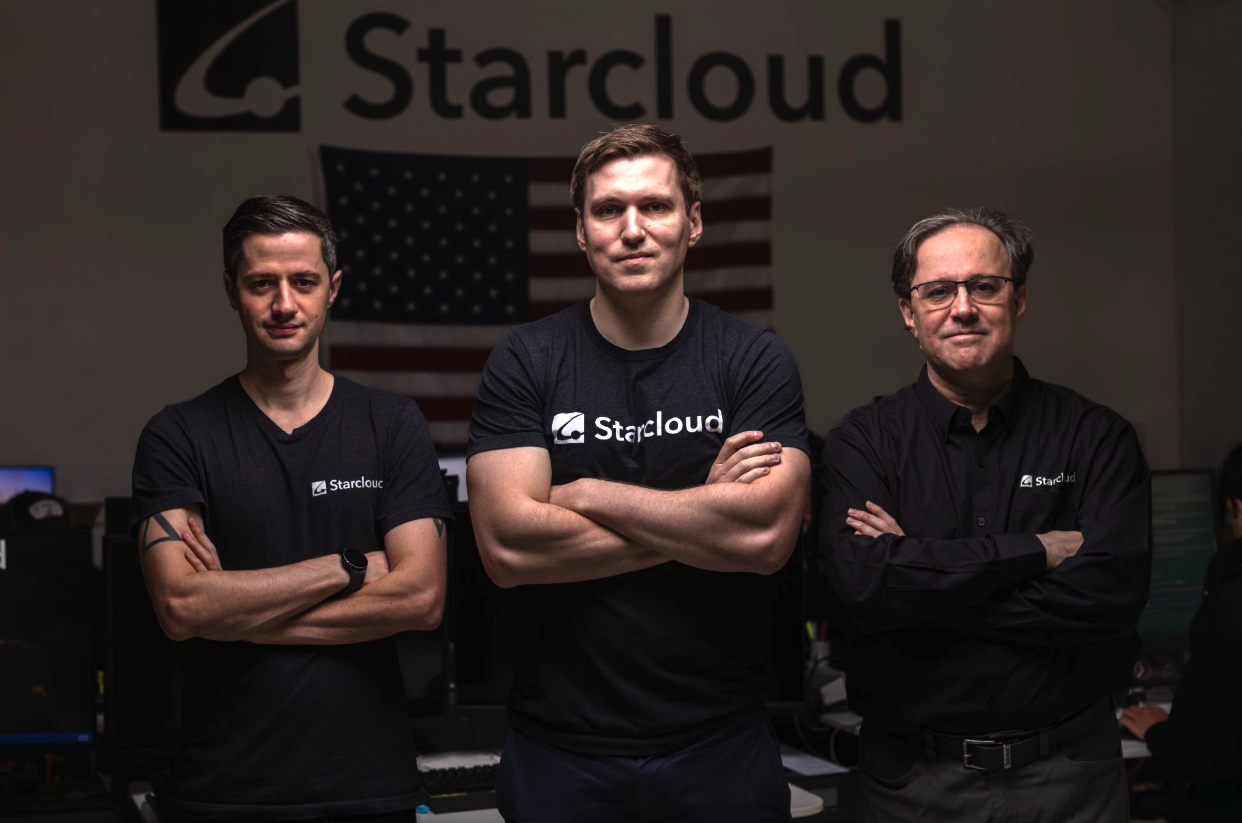
Starcloud says the new investment will fund the continued buildout of manufacturing capacity, engineering work in collaboration with Nvidia and the procurement of future launch slots. Manhattan West’s Lauren Selig will join Starcloud’s team as a board observer.
Starcloud has filed an application with the Federal Communications Commission to operate as many as 88,000 satellites as orbital data centers for AI and other applications. It’s not the only company targeting the market for orbital data centers. Most notably, SpaceX has filed its own plans to put up to a million data center satellites in space, for a project called Starmind.
The push to move AI infrastructure into space is driven by growing terrestrial bottlenecks surrounding land, power and water consumption — and by the political controversies those bottlenecks have sparked.

💸 Earn Instantly With This Task
No fees, no waiting — your earnings could be 1 click away.
Start Earning
