


Putting AI into production now takes more than deploying a model and tracking accuracy. MLOps made traditional ML manageable, while LLMOps added concerns around prompts, retrieval, evaluation, latency, and cost.
AgentOps adds another layer for systems that decide, call tools, and complete multi-step tasks. These shifts change what teams monitor and control. In this article, we compare MLOps, LLMOps, and AgentOps, and explain how observability evolves as AI systems move to action.
What Is MLOps?
MLOps stands for Machine Learning Operations.
It covers the practices used to build, deploy, monitor, and maintain machine learning models in production. The goal is to make ML systems reliable, repeatable, and easier to manage at a scale.
A typical MLOps workflow includes:
- Data collection and validation
- Model training
- Experiment tracking
- Model versioning
- Deployment
For example, a fraud detection model may be trained on historical transactions, deployed as an API, and monitored for accuracy and data drift. If performance drops, the model may need retraining. MLOps is mainly built around predictive models where the output is usually structured, measurable, and easier to compare against a known target.
Read more: MLOPs Operations: A Beginner’s Guide in Python
What Is LLMOps?
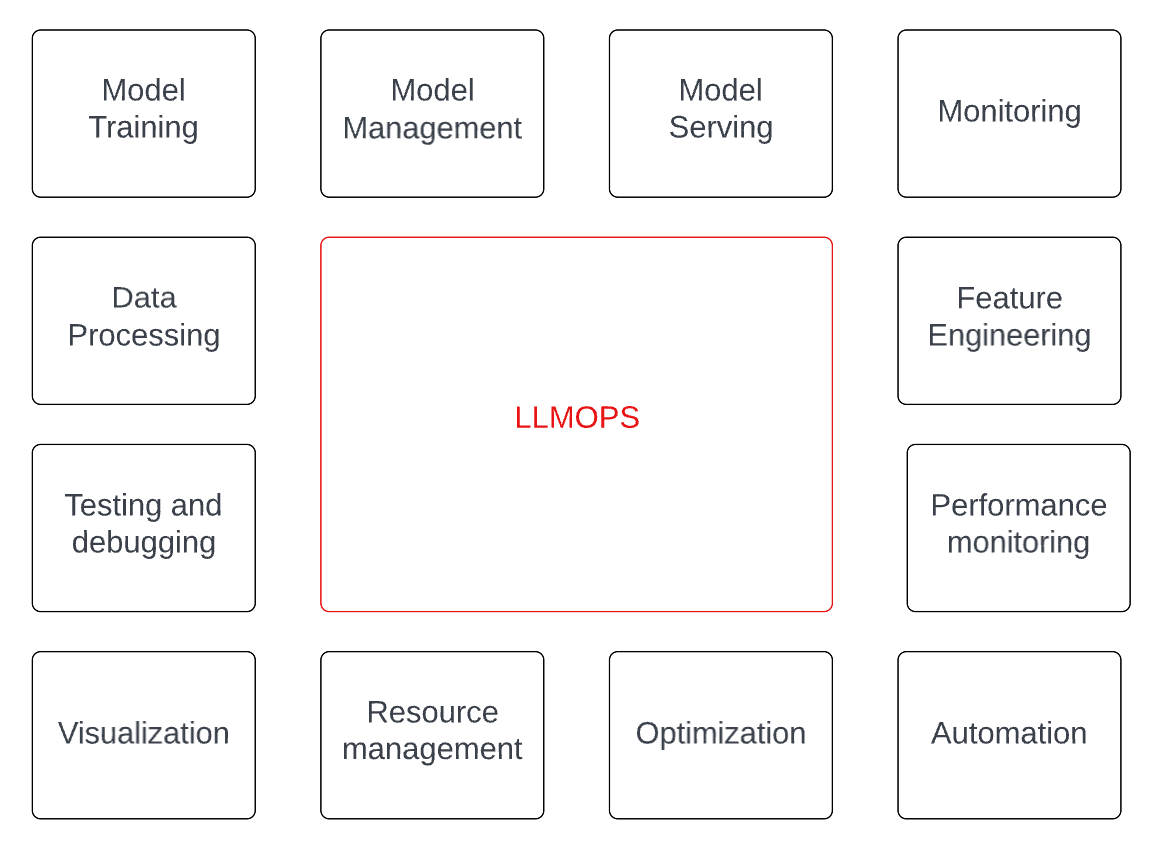
LLMOps stands for Large Language Model Operations.
It focuses on deploying, monitoring, and improving applications built with large language models. Unlike traditional ML systems, LLM applications often depend on more than the model itself. They may use prompts, vector databases, retrieval pipelines, external APIs, and guardrails.
A typical LLMOps workflow includes:
- Prompt versioning
- Model selection
- Retrieval monitoring
- Evaluation of generated responses
- Token and cost tracking
For example, a customer support assistant may use an LLM with RAG to answer questions from company documents. Here, teams need to monitor not just model performance, but also retrieval quality, response quality, token usage, and cost. That makes LLMOps broader than traditional MLOps for generative AI systems.
What Is AgentOps?
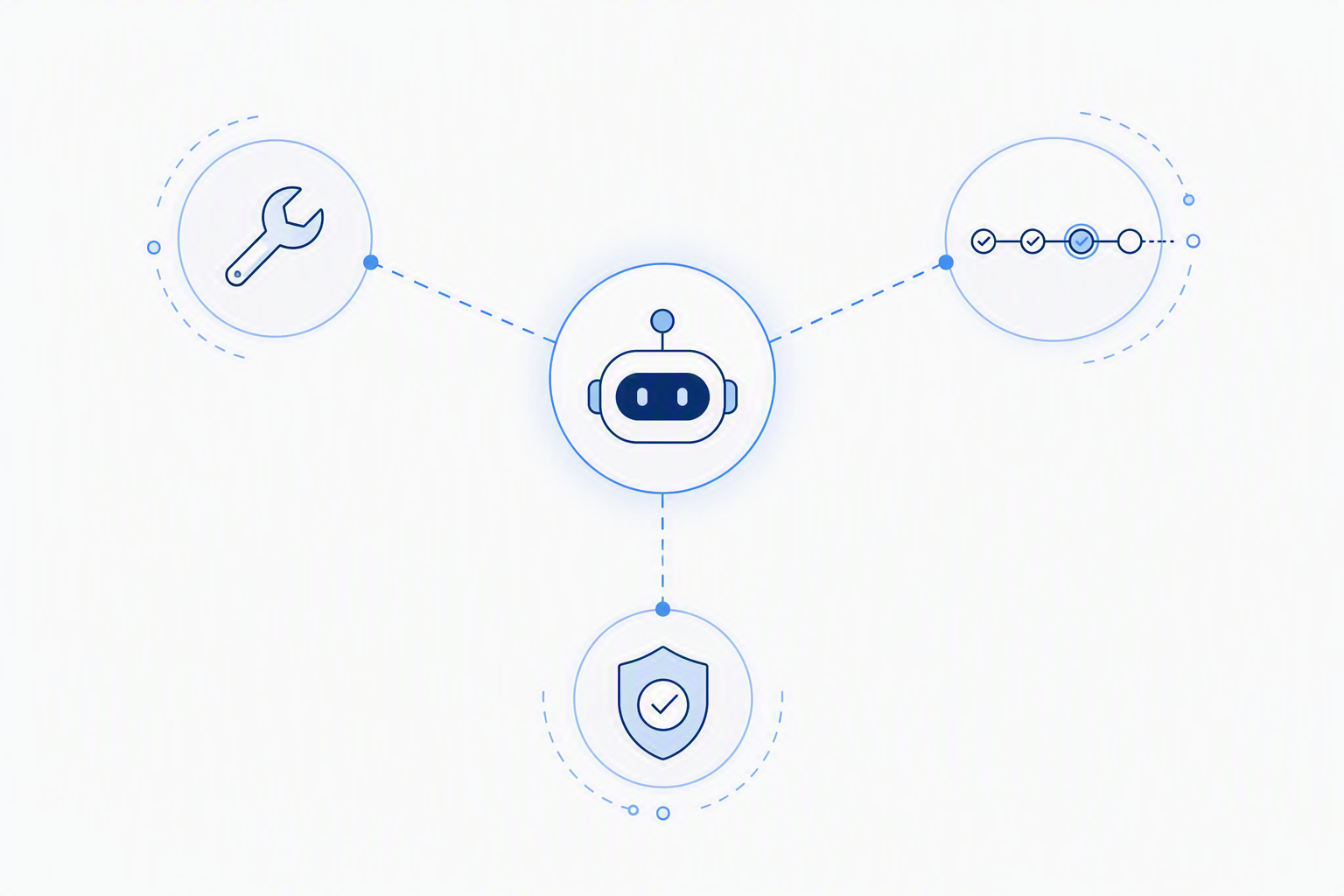
AgentOps focuses on operating AI agents in production.
An AI agent does more than generate a response. It can plan tasks, call tools, use memory, make decisions, and take actions across multiple steps. This creates new operational challenges. A typical AgentOps setup may track:
- Agent decisions
- Tool calls
- Multi-step traces
- Task completion rates
- Failed actions
For example, an AI travel agent may search flights, compare options, check calendars, and create a booking request. If something goes wrong, teams need to know which step failed and why. AgentOps therefore adds observability at the workflow level. The focus is not only on what the model said, but also on what the agent did.
MLOps vs LLMOps vs AgentOps
The main difference is what you are operating.
MLOps focuses on machine learning models. LLMOps focuses on language model applications. AgentOps focuses on systems where AI agents take actions across multiple steps.
| Area | MLOps | LLMOps | AgentOps |
| Main Focus | ML models | LLM applications | AI agents |
| Typical Output | Prediction or score | Generated response | Action or completed task |
| Key Monitoring | Accuracy, drift | Quality, latency, cost | Traces, tools, decisions |
| Common Components | Data, model, pipeline | Prompt, model, RAG | Agent, tools, memory |
| Main Risk | Model degradation | Hallucination or poor output | Wrong or unsafe action |
| Evaluation | Metrics against labels | Response quality | End-to-end task success |
The progression is simple:
- MLOps manages predictions.
- LLMOps manages generations.
- AgentOps manages actions.
Where Each One Fits
MLOps, LLMOps, and AgentOps are not competing approaches. They solve different operational problems. Use MLOps when the core system is based on traditional machine learning models. Use LLMOps when the application depends on large language models, prompts, retrieval, and generated responses. Use AgentOps when the system includes AI agents that use tools, make decisions, and complete multi-step tasks.
A simple way to think about it is:
- MLOps: operate models
- LLMOps: operate language model applications
- AgentOps: operate autonomous or semi-autonomous workflows
In practice, teams may use all three together. For example, an agentic application may use a traditional ML model for scoring, an LLM for reasoning, and an agent layer for taking actions. The operational stack depends on the system architecture.
Conclusion
MLOps, LLMOps, and AgentOps show how AI operations have evolved as systems have become more capable. MLOps focuses on models and predictions, LLMOps expands that scope to prompts, retrieval, generated responses, latency, and cost, while AgentOps adds workflow-level visibility into how agents reason, use tools, and complete tasks.
The takeaway is clear: operating AI is no longer just about monitoring a model. It is about understanding the full system behind every output and action. As AI applications move from prediction to generation to autonomous workflows, teams that build strong observability, evaluation, cost control, and safety practices will be best prepared to operate them at scale.
Frequently Asked Questions
A. MLOps manages predictions, LLMOps manages generated responses, and AgentOps manages AI-driven actions.
A. Teams use LLMOps when applications depend on large language models, prompts, retrieval, response quality, latency, and cost tracking.
A. AgentOps helps teams monitor agent decisions, tool calls, task completion, failed actions, and workflow-level behavior.

Hi, I am Janvi, a passionate data science enthusiast currently working at Analytics Vidhya. My journey into the world of data began with a deep curiosity about how we can extract meaningful insights from complex datasets.
Login to continue reading and enjoy expert-curated content.

💸 Earn Instantly With This Task
No fees, no waiting — your earnings could be 1 click away.
Start Earning
