


They say comparison is the thief of joy. It certainly makes it hard to enjoy Orbitals at times. Shapefarm’s take on the split-screen co-op adventure popularized by Hazelight with games like the award-winning It Takes Two and its follow-up, Split Fiction, is admirable for the ways it manages to differentiate itself from the games that clearly inspired it (co-director Jakob Lundgren notably worked at Hazelight for six years). But unlike those greats, which perfectly timed their multi-course meals to leave both players full and fulfilled by the time they brought out the dessert, by the time it’s over, Orbitals feels like it’s run out of ideas.
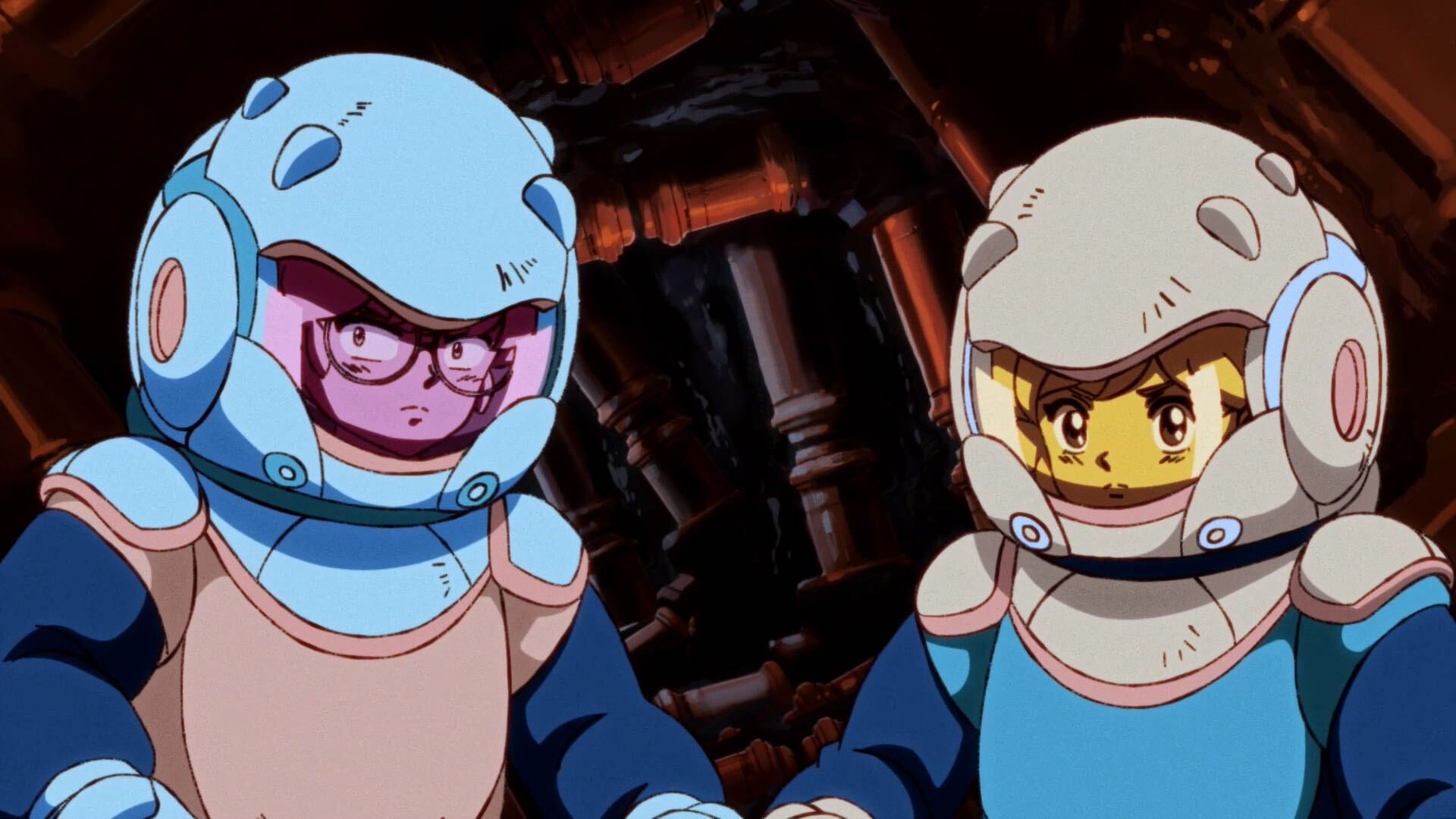
Orbitals is inspired by landmark ‘90s anime like Neon Genesis Evangelion and Cowboy Bebop, and for all my other quarrels with the game, it looks really impressive. The way its leading duo moves through the world that looks straight out of an anime you’d watch on a CRT in 1997 is almost uncanny. The game’s cinematics, animated by Japanese anime company Studio Massket, could easily fool even the most diehard anime connoisseur into thinking they had missed some sci-fi gem from 30 years ago. The fact that it’s legitimately difficult to differentiate between those animated cutscenes and the world you move through when playing is quite the feat. Plenty of games aspire for the anime style, but it’s not often you get games with this level of artistic depth and contrast that so well mimic the art of the time.
The line between homage and derivative is thin, however. Orbitals looks the part, but the anime blocks that make up its foundation are so overt in places that the game ends up simply harkening back to the shows that did the same things before, and often better. Its space-faring romp brings Bebop to mind, and its existential themes and late-game conflicts are only barely retooled versions of what Evangelion pulled off over 30 years ago. The game’s two leads, sprightly Maki and stuffy Omura, are fun enough faces for the story it’s telling, but Orbitals never gives anything they’re feeling or facing any real screentime. They never develop into more than caricatures of anime tropes, acting out familiar stories with the skill of amateur actors doing community theater. The heart’s in the right place; the craft isn’t up to par.
That’s not to say that It Takes Two or Split Fiction were master classes in cooperative storytelling. Narratively, Orbitals falls woefully short in comparison to the anime it draws from, not to its video game genre contemporaries. It plays out the abridged summary of a stronger story, so the actual two-player puzzle solving has to be enough to carry it across the finish line. And it does, mostly, but at a slow jog rather than in a photo finish.
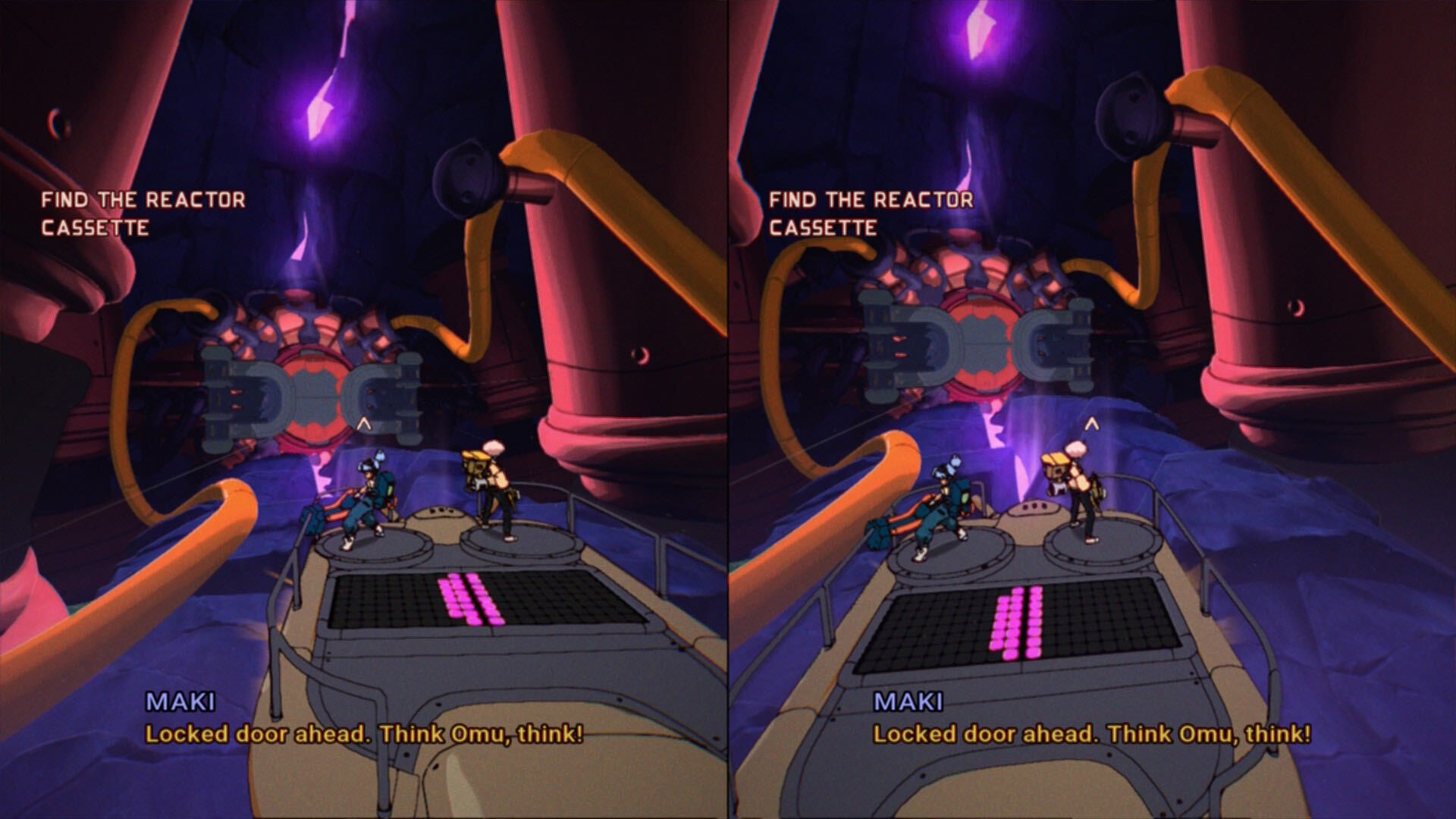
Orbitals is split between ship-based space exploration and on-the-ground, tool-based puzzles. When you’re on the ship, one player pilots the vessel while the other mans the turret on top. This isn’t a complex ship to run or a tricky gun to aim, which is good because coordinating with your teammate is pretty intuitive if you’ve got a competent player two. Some of the more interesting segments come when Orbitals breaks up its usual flow. During one boss fight, I was piloting the ship while my friend was on the turret, and our foe sabotaged our systems, requiring my buddy to get off the gun and run through the ship fixing the problem while I was still trying to swerve out of the way of incoming hazards. Orbitals can subvert its own ideas when it wants to, and that willingness results in some of its most memorable moments.
Orbitals is also great at riffing on its too-few concepts. Every time Maki and Omura get out of the ship and explore space stations around them, they take one of a few select tools with them. These include gadgets like a grappling hook, a laser beam, and a space hose. The environments the pair uses these tools to move through are often varied and have clever puzzles to solve, and when you and your teammate are perfectly synchronized and working in tandem to do things like repair a ship engine, with one player pulling objects with the hook while the other pushes with the hose, it’s the kind of thing that makes you want to give your friend on the couch a high five. Those early moments of finding a rhythm for you both to dance to are wonderful, but as the game goes on, you encounter similar situations repeatedly, such that you fall into habit more often than you face the satisfaction of getting stumped and mind-melding to figure out a solution to a problem you haven’t encountered before.
-
BACK-OF-THE-BOX-QUOTE:
“Enough anime rivals, it’s time to make anime friends.”
-
DEVELOPER:
Shapefarm
-
TYPE OF GAME:
Two-player co-op platform puzzler.
-
LIKED:
It sure does look cool and when the puzzle platforming hits, it hits.
Shapefarm’s anime-inspired spin on Hazelight’s formula is stuck bouncing back and forth between inspirations without ever taking the next step into carving out its own identity. The most impressive thing about it is how well it emulates something else, and that only makes the places where it falls short more apparent because it doesn’t quite hit the highs it’s reaching for. It’s a competent game in the genre, but by the time my co-op partner and I overcame its final challenge, all I was really thinking about was that I wanted to rewatch Evangelion, rather than think much harder about anything think much harder about anything Orbitals had shown me.

💸 Earn Instantly With This Task
No fees, no waiting — your earnings could be 1 click away.
Start Earning
