


Marathon game director Joe Ziegler leaving Bungie does not, by itself, mean the company is in trouble. People leave jobs. He may have received an excellent offer elsewhere, fancied a change or simply decided that spending several years making an extraction shooter was quite enough extraction shooting for one lifetime.
But nothing happening at Bungie exists in isolation anymore.
Ziegler is leaving just four months after Marathon launched, at a time when the game desperately needs to build momentum. Assistant game director Del Chafe III is stepping up to replace him alongside creative director Julia Nardin, so Bungie at least has experienced people ready to take control.
Still, losing the person who guided Marathon through development and launch is hardly ideal when the game’s future is so closely tied to Bungie’s own.
And right now, the numbers do not look good.
At the time of writing, Marathon has a 24-hour peak of just 6,435 concurrent players on SteamDB, down from an all-time peak of 88,337. That is an enormous decline for a live-service game that only launched in March.
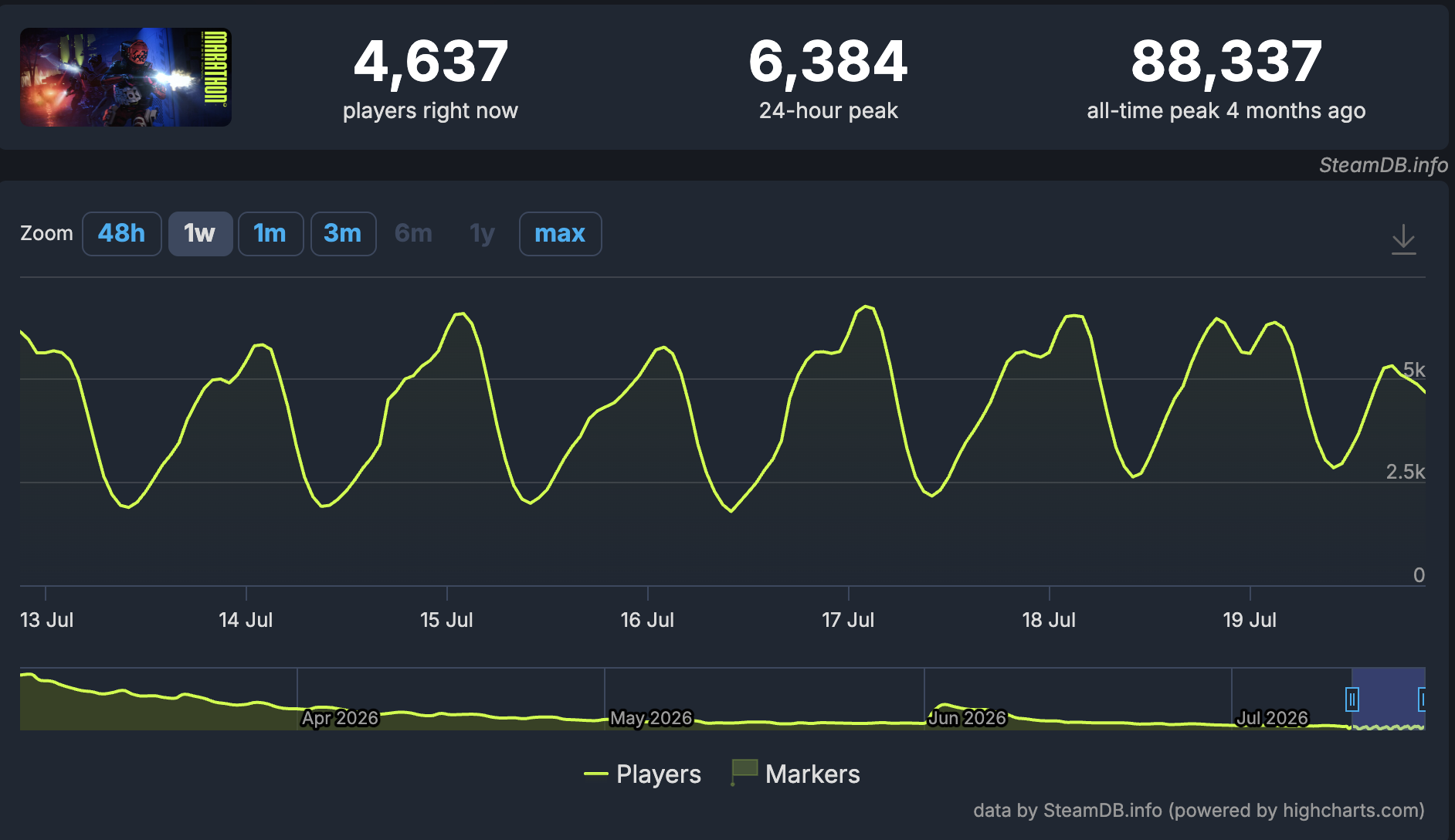
What makes it worse is that Season 2 launched at the beginning of June, bringing a new map, weapons, enemies, progression changes and experimental game modes. It briefly pushed Marathon’s Steam numbers back into the 30,000–40,000 range, giving Bungie a much-needed glimmer of hope.
Unfortunately, that bump disappeared almost as quickly as it arrived. The game is now back to peaking at a little over 6,000 players per day.
Steam numbers never tell the whole story because Marathon is also available on PlayStation and Xbox. However, previous estimates from Alinea Analytics suggested that 68% of Marathon’s sales were on Steam, compared with just 19% on PlayStation 5 and 13% on Xbox.
Paul Tassi was also previously told by sources that the console audience “really do not care for this thing.”
Assuming those estimates are reasonably accurate, Steam is not merely one small section of Marathon’s audience. It is the game’s most important platform and therefore a fairly strong gauge of its overall health. And that gauge is currently on fire and emitting sparks.
Perhaps Bungie can still turn things around. The studio is adding more PvE-focused experiences and Marathon has received a fairly positive reception from many of the people who have stuck with it. Live-service games have recovered from bad launches and low player counts before. And Bungie claim they intend on supporting the game for the forseeable future.
But Marathon does not have the luxury of quietly finding its feet over several years. Bungie needs it to work now because they are in a tenous position.
Sony recently cut 292 jobs from Bungie’s Bellevue office, with the layoffs affecting most of the Destiny team and even some people working on Marathon. Once the latest cuts are included, Bungie has reportedly lost more than 600 employees across three rounds of layoffs since Sony bought the company in 2022.
Sony has also taken two impairment losses against Bungie worth approximately $765 million in total. In plain English, Sony has repeatedly looked at the studio it paid $3.6 billion for and concluded that it is no longer worth as much as expected.
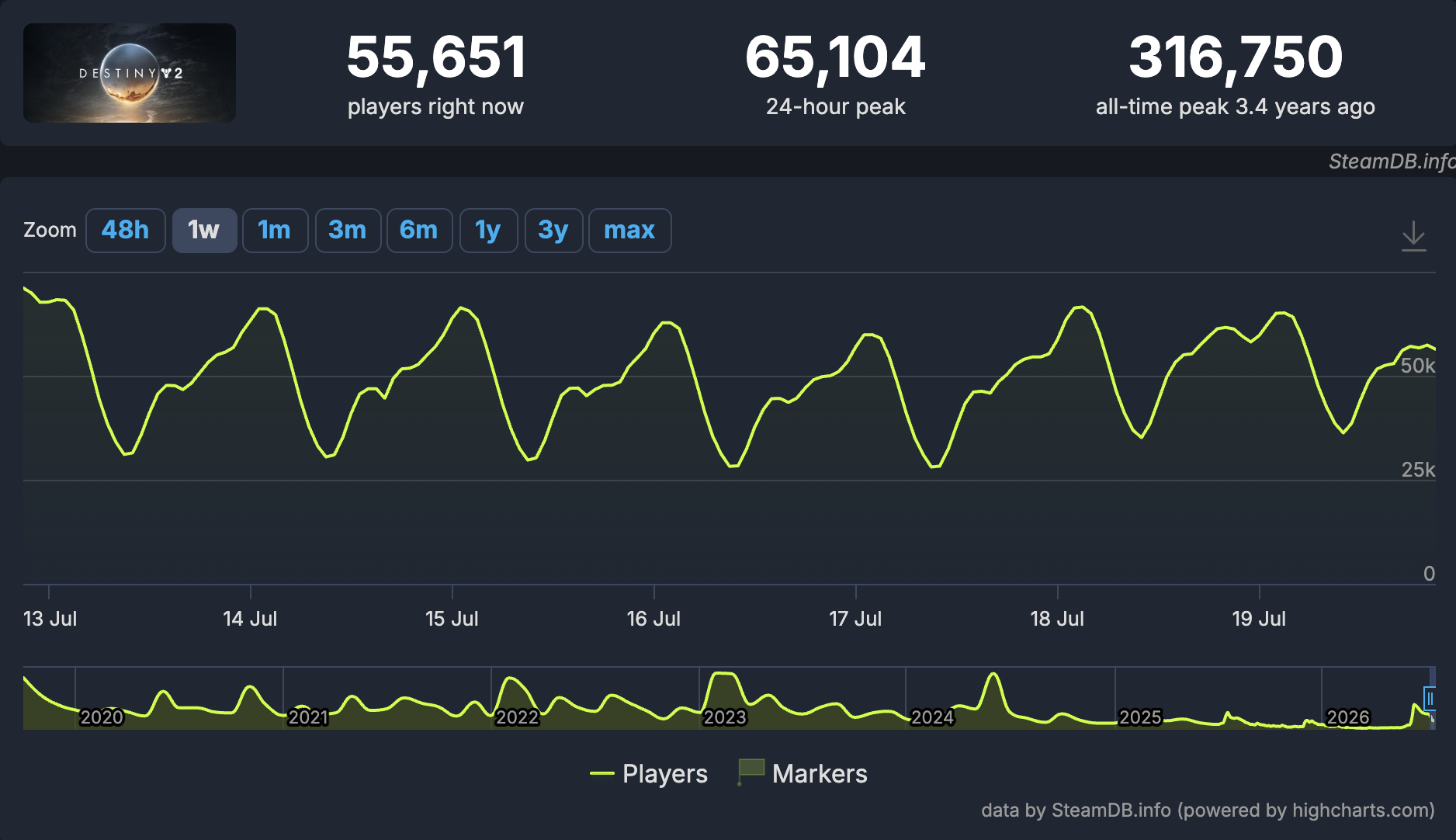
Destiny 2 has now received its final live-service content update, ending active development after almost nine years, royally pissing off a lot of people who still played. In a slightly ironic twist, the announcement that Destiny 2 wouldn’t get any new content brought back players in their droves, the kind of numbers that the game really needed to keep it alive over the past year or two. Shame they didn’t turn up when it mattered.
You might assume that would free Bungie up to begin work on Destiny 3, but according to previous reporting, Destiny 3 is neither in production nor greenlit. Bungie reportedly has no other approved game in active development, either. There are ideas being pitched and projects sitting in the vague world of “early incubation,” but nothing concrete that can take over if Marathon cannot keep the lights on.
That leaves Bungie in a fucking terrifying position. Its established moneymaker is no longer receiving new content. Its workforce has been severely reduced. Sony has repeatedly written down its value. Its newest game has lost most of its players within four months, and the person who directed that game has now left the company. Oh, and whatever new project they come up with will most likely not be released until well after 2030.
Sony will probably continue giving Marathon time to find an audience. It spent far too much money on Bungie to pull the plug without trying everything first, and there is still plenty of value in the Destiny name, Bungie’s technology and the talent that remains at the studio.
But patience is not infinite, especially after hundreds of millions of dollars in impairment losses and several rounds of layoffs.
Unless Marathon can stabilise its audience and begin growing again, it is difficult to imagine Sony continuing to fund Bungie as a major standalone developer while waiting years for another project to emerge from incubation.
That does not mean Bungie is about to close tomorrow. But between Marathon’s collapsing numbers, the lack of another game in production and the sheer scale of the cuts already made, the future of one of gaming’s most iconic studios now appears balanced on a knife edge. Could we be looking at a world without Bungie? And would that be worse than a world where we have a Bungie that’s a pale shadow of its former self?
It’s a shitty time to be a fan of the industry, isn’t it? So many historic, iconic studios are at risk right now. Sad times, my friends. Sad times.

💸 Earn Instantly With This Task
No fees, no waiting — your earnings could be 1 click away.
Start Earning