


Like anyone who grew up with the internet, I’ve used Gmail and Outlook for formal communications for many years. While I’ve noticed many differences among them, I’ve often wanted to stack them up and compare them to see which is the better email software on the market.
When I started this exercise, one thing became very clear. Both are mature, reliable tools backed by powerful ecosystems: Microsoft and Google Workspace. Both serve millions of users worldwide, ranging from individual professionals to global enterprises. And both consistently rank highest in market presence among all email software on G2, with Gmail at #1 and Outlook at #2.
In this blog, I’ll share how these two platforms measure up and where each of them stands apart.
TL;DR: Gmail and Outlook are both leading email platforms that offer free plans with 15GB storage space, industry-leading security infrastructure, and integration into larger and well-integrated ecosystems. Choose Gmail for simplicity and scalability; choose Outlook for structured workflows and enterprise control.
- Gmail stands out for its intuitive web interface, powerful search, seamless integration, and easy-to-use Mobile app. From my experience, Google Workspace collaboration makes it ideal for speed and ease of use.
- Outlook excels in enterprise environments thanks to deep Microsoft 365 integration, advanced organizational tools, and a robust desktop client.
Gmail vs. Outlook: Quick comparison
| Feature | Microsoft Outlook | Gmail |
| G2 rating | 4.5/5 ⭐ | 4.6/5 ⭐ |
| Best for | Enterprise and Microsoft-centric teams. | Cloud-first teams and Workspace users, mainly startups and SMBs. |
| Interface | Feature-rich and structured. | Clean and minimalist, which makes it easy for beginners. |
| Organization | Allows you to neatly sort into folders, categories, and rules. Also has extensive rule automation and views. | Has a flexible label system and smart features. |
| Integrations | Microsoft 365 ecosystem (Teams, Word, OneDrive, etc). | Google Workspace ecosystem (Docs, Sheets, Drive, Meet, etc). |
| Search | Advanced filters and query tools. | Fast, intuitive search. |
| Security | Strong enterprise controls and compliance. | Powerful spam & phishing protection; evolving encryption features. |
| Mobile experience | Unified mail, calendar, and files. | Lightweight, cloud-centric apps. |
| Collaboration tools | Built-in calendar and task management with deep Microsoft app links. | Real-time collaboration across Google apps in the Google suite and Gemini AI email integration. |
| Free Plans | Yes, basic plan with advertisements. | Yes, standard Gmail without advanced features. |
| Storage on the free plan | Up to 15 GB email storage. | Up to 15 GB shared via Google Drive across Gmail and other G Suite products. |
| Learning curve | Moderate to steep (more features). | Gentle (intuitive UI). |
| AI features | Powerful AI features powered by Copilot that help you draft and polish email copy, schedule messages, summarize emails, and enhance email search capabilities. | Powered by Gemini AI, it lets you draft, ideate, summarize, filter, and more. |
| Support for advanced workflows | Strong for businesses using Microsoft Teams and 365 apps. | Strong for collaborative workflows and tied into Google Workspace. |
| Pricing (Business) |
Microsoft 365 plans with desktop apps. Outlook: Free |
Google Workspace: Free Business Starter: $6/user/month Business Standard: $12/month Business Plus: $18/month |
Note: These details are based on the capabilities as of February 2026 and are subject to change with new rollouts!
Outlook vs. Gmail: What’s different and what’s not?
I’m sure you’re aware that Outlook and Gmail both power modern email workflows. They, however, seemed to be built with different priorities in mind. I found that Outlook focuses on structure, control, and deep integration with Microsoft 365, while Gmail emphasizes simplicity, intuitiveness, speed, and cloud-first collaboration within Google Workspace. Both are mature, widely adopted platforms, but they serve different working styles and organizational needs.
Outlook vs. Gmail: Key differences
While Gmail and Outlook are both email platforms, one is built for convenience, and the other for structure and scale. Some of the main differences I noticed were:
- Product philosophy and interface: Outlook is designed as a centralized productivity hub that combines email, calendar, contacts, and tasks in a single feature-rich interface. Gmail takes a web-first approach, keeping the inbox clean and relying on integrations for adjacent processes.
- Email organization model: Outlook uses folders, categories, and rules to support structured inbox management and automation. Gmail relies on labels, filters, and tabs, allowing messages to exist in multiple categories and supporting a more flexible, search-driven workflow.
- Ecosystem integration: Outlook integrates tightly with Microsoft 365 tools like Teams, OneDrive, Word, Excel, and SharePoint, making it well-suited for desktop-heavy and enterprise environments. Gmail connects seamlessly with Google Workspace apps such as Docs, Sheets, Drive, Meet, and Chat, enabling real-time collaboration.
- Usability and learning curve: Outlook’s feature depth benefits power users but can feel complex for casual users. Gmail’s minimalist interface is easier to learn and faster to adopt, particularly for smaller teams.
- Typical use cases: As per G2 Data, Outlook is commonly favored by mid-market (36%) and enterprise organizations (39%) with IT-managed environments and compliance needs. Gmail is more popular with startups and small businesses (44%) and with cloud-first teams that value accessibility and speed.
Outlook vs. Gmail: Key similarities
Despite the above differences, I think at the core, both platforms run on making the absurd world of email communications easy to use. Some of the most common similarities are:
- Core email capabilities: Both platforms support threaded conversations, powerful search, spam filtering, attachments, and customizable inbox views.
- Cross-device availability: Outlook and Gmail are available on desktop, web, and mobile, providing consistent access across devices.
- Baseline security: Each includes essential protections such as AES-256 encryption, phishing and spam filtering, and multi-factor authentication.
- Business readiness: Both support custom domains, admin controls, and scalable plans through Microsoft 365 and Google Workspace.
- Collaboration tools: Both email tools are part of a broader IT ecosystem that connects to multiple tools, such as calendars, note-taking, documentation, and more.
- Widespread adoption: Outlook and Gmail are globally trusted, widely used, and deeply embedded in modern work environments.
How I tested Outlook vs. Gmail: My evaluation criteria
To compare Outlook and Gmail fairly, I tested both platforms using real-world scenarios that reflect how people actually use email at work and in everyday life. I used the free versions of these tools first and relied on G2 Data to obtain reliable and trusted information on how these platforms perform for businesses of different sizes.
I’ve also focused on both desktop and mobile experiences to understand how each platform performs across devices.
Use cases include:
- Email composition and management: Scheduling messages, organizing threads, creating rules, using templates, and managing inbox clutter.
- Collaboration workflows: Sharing files, coordinating meetings, and working across calendars.
- Ecosystem integrations: Connecting email with broader productivity suites — Microsoft 365 for Outlook and Google Workspace for Gmail.
- Security and admin controls: Reviewing spam filtering, multi-factor authentication, and administrative options relevant to business use.
Evaluation criteria:
- Usability: How intuitive and efficient the platform feels during daily use.
- Productivity: Features that reduce time spent managing email.
- Integration: How seamlessly does email connect with other tools?
- Business readiness: Capabilities that matter in professional environments, such as custom domains, policies, and controls.
To balance hands-on testing with a real-world perspective, I also considered verified user feedback and common themes surfaced across business and individual users on G2.
Disclaimer: I shared my experience testing the two tools as of February 2026. If you read this after a few months, some features and functionality might have evolved.
Gmail vs. Outlook: How they performed on all my tests
The best way to test both these email tools is to sign up and use them as a general user would, and that’s exactly what I did. Despite using these tools for a while, many surprises were in store for me, as they might be for you. Here is how each of them performed in my tests.
1. Interface and user experience
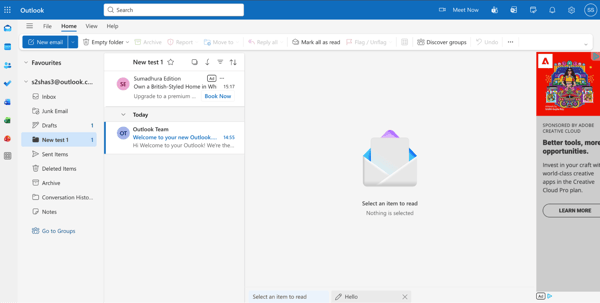
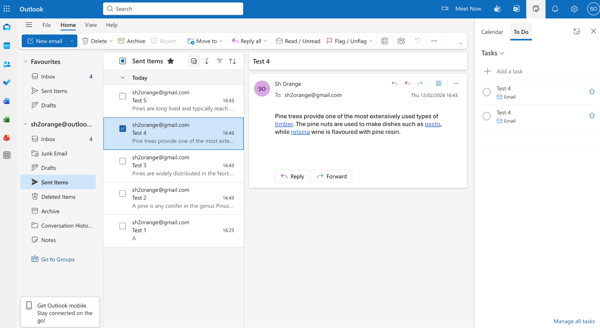
As soon as I created my account and logged into Outlook, I felt the interface was information-rich. On the left-hand panel, I found Microsoft apps such as Calendar, Tasks, Contacts, Word, and Excel all in one place. For power users who switch between interfaces, this creates great efficiency and context. As a new user, I found the setup quite intimidating.
Further, there is a large advertisement banner on the right-hand side in the free version, which users might feel is more obtrusive. This is in addition to the promotional emails that I received in my inbox. Advertisements like this are new to me while using email, since Gmail has only promo and ad emails on the free version. While I do understand the need for ads, I have to give the point to Gmail here, as I feel these ads could overwhelm and distract new users with too much information.
Tip: I would recommend trying to clear the cache or using the Chrome browser in case you are having trouble with bot verification.
Gmail, on the other hand, takes the opposite approach. I liked the clean, minimal interface and found it easy to navigate. Most features stay out of the way until you need them. The primary focus of the free account is helping users get started with sending their first email.
I feel the interface is remarkably intuitive, especially with how easy it is to navigate around and get used to new features and settings. Sending an email opens a pop-up with multiple options to intuitive symbols for drafting and attaching items. I liked that it has an option to attach an email signature while you draft the email, and that it takes you to the settings page if you haven’t added one yet.
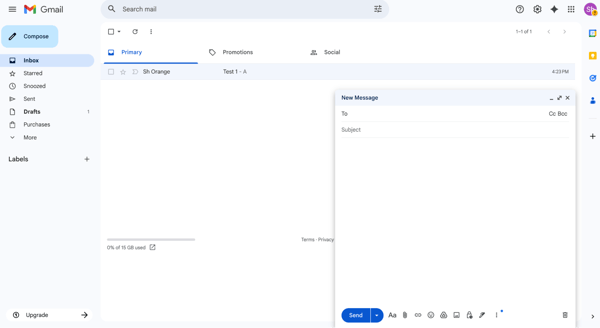
For most users, especially those new to business email platforms, Gmail’s simplicity makes it easier to adopt and use day to day.
Winner: Gmail
2. Email organization
Once I started testing for organization, Outlook genuinely impressed me. I found that it lets you organize by folders and rules to create a structured inbox. This approach will work well for users who like clear hierarchies and automated routing.
Gmail uses the labels approach, which allows a single message to exist in multiple categories at once. I found this to be a flexible but confusing system, since emails can tend to appear in multiple labels. Also, having used Gmail to create rules and filters, I found it could seem daunting and confusing at first, due to the auto-segmentation section.
However, once you cross this hurdle, Gmail performs item segregation very well based on the rules you’ve set.
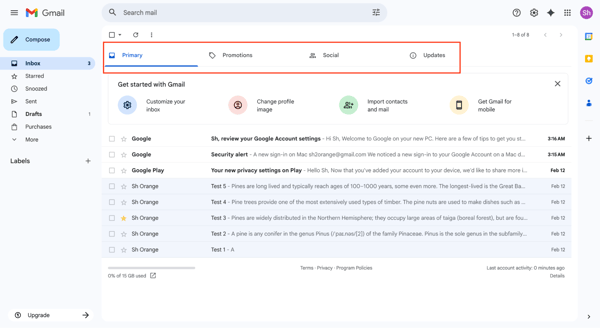
I will give the result to Outlook as it wins for its strict structure and automation, which makes it easy to segregate. While Gmail offers great flexibility and search-based organization, the confusion can work against it.
Winner: Outlook
Need more help in managing your inbox, but want to avoid unnecessary spending? Find the most relevant tools in our list of the best free email client platforms.
3. Search and smart tools
To test the search features of both tools, I conducted a casual search for emails without any specific parameters, just by searching for the words in the subject, body, or the user’s name. I then carried out a refined search by filling in specific fields such as the sender’s and receiver’s email address, email subject, attachment name and confirmation, and exact text mentioned in the body to assess the accuracy of search results.
Outlook offers advanced search filters that are effective for users who know exactly what they’re looking for. In the basic searches, the keywords I searched for consistently surfaced the email I was looking for. Outlook’s AI-enabled search was able to instantly look up emails containing the string I searched. The refined search also consistently showed results I was looking for.
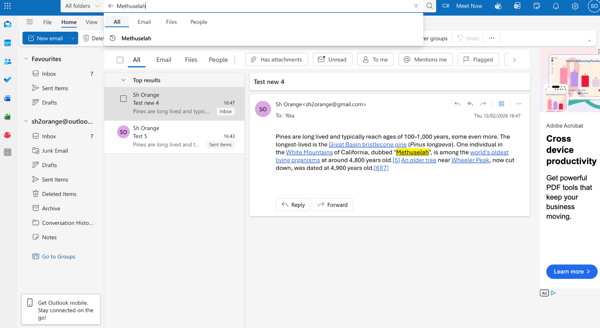
I found Gmail’s search to be just as intuitive to use, and results pop up quite quickly. However, on the free plans, I did feel that finding exactly what you need might need a more refined search with specific fields, such as the “from”, “to”, “time period”, or “subject”. Adding these details tended to improve the search results, allowing me to find what I was looking for more efficiently.
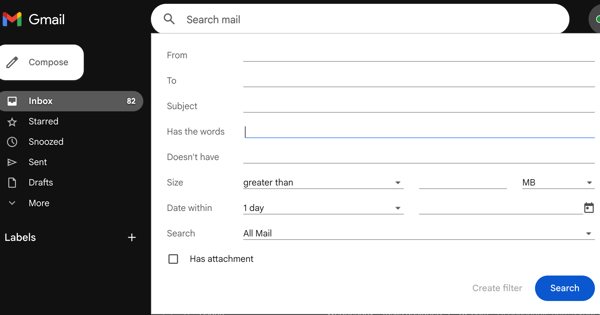
While Outlook does provide fast, efficient searches, Gmail’s search experience is more intuitive and allows for more thorough searches.
Winner: Gmail
4. Integrations and productivity
Both Gmail and Outlook come with the perks of being attached to larger ecosystems with many helpful features.
I was expecting Outlook to integrate well with Microsoft tools like Word, Excel, PowerPoint, Teams, and OneDrive, but was surprised at how easy and fluid it is to move between these apps. I must note that, as a non-native Microsoft ecosystem user, turning email threads into meetings or tasks required additional learning time across all the apps. For someone familiar with the ecosystem, this should be a breeze, making Outlook especially strong for structured office workflows.
Coming to Gmail, I found that even for a new user, it integrates tightly with Google Workspace tools like Docs, Sheets, Drive, and Meet, but also connects very well to third-party apps such as Zoom, Canva, and more. These integrations allowed me to collaborate with my team much more easily in real time when sharing files. Something I loved is how well Google Meet and Calendar integrate with my email, making it a one-stop shop for viewing all my tasks, document changes, events, and calls. I feel there really is no other ecosystem as well synced for productivity.
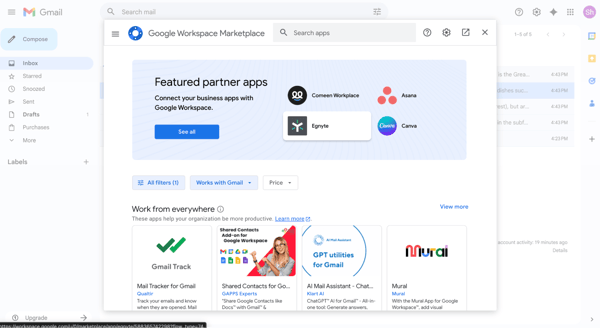
Both of them win for their respective ecosystems. Outlook is better for Microsoft 365-enabled workflows, and Gmail shines in its cloud native Google Workspace environment.
Winner: Split; depends on the ecosystem
Related: We’ve compared Google, Outlook, and other calendar tools to find the best calendar apps on G2.
5. Security and spam filtering
In security, both platforms offer strong baseline email security features, including spam filtering, encryption, and multi-factor authentication, backed by enterprise-grade security.
Right from the time I created an account, I found that Outlook and Gmail have bot checks and prompted me to add multi-factor authentication. Gmail takes the bot verification a step further by asking me to verify my device to reduce the chances of bot signups. While this didn’t cause me any issues, those without devices can face quite a hurdle.
In terms of spam filtering, I found that, on a basic level, both Outlook and Gmail perform well enough. I did see that many legitimate emails were categorized as spam on both platforms.
I will have to caveat this by saying that if you’re looking for enterprise-grade security, Outlook offers a bigger advantage with its enterprise-grade controls and compliance features available through Microsoft 365 plans. These are especially important for regulated industries.
Gmail provides excellent built-in protection against spam and phishing and continues to improve enterprise security features for Workspace customers.
Outlook has the edge for organizations that need advanced admin and compliance controls.
Winner: Outlook (enterprise)
6. Mobile app experience
To test the mobile app interface, I mainly wanted to see how well they performs in terms of usability, space, and how intuitive it is to use with your hand. I must mention from the get-go that the app’s sign-up process is quite intuitive for both Outlook and Gmail, and both allow you to use other platforms in the app. That being said, I tested with the accounts I had created for each ecosystem to ensure I could make the most out of collaborative tools.
I also wanted to see how much control I actually had as a host. If things go off the rails, someone gets noisy, shares the wrong screen, or I suddenly need to lock the room for a sensitive discussion, how quickly can I fix it without turning the meeting into chaos?
I found Outlook’s mobile app to be much simpler to use for sending emails, and shifting between email, calendar, contacts, and files into one experience was possible with a finger tap. I would say business users who are tied to the Microsoft ecosystem will find this convenient. It also allows for finger actions, which are quite convenient.
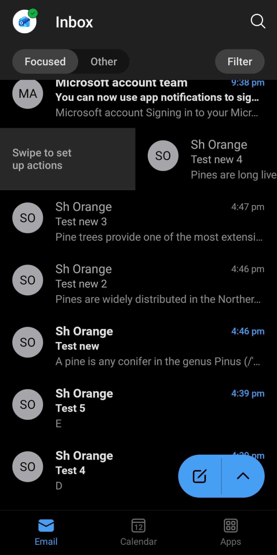
On the other hand, I’ve used the Gmail mobile app, and I’ve found it to be quite lightweight, fast, and easy to use. Logging in or creating an account is quite simple from the app interface as well. One thing I loved about how they adapt for mobile applications is the ability to left-swipe to mark something as unread or right-swipe to archive an email. However, most other applications, such as calendar and contacts, redirect to separate applications, requiring a larger app ecosystem for smoother business collaboration.
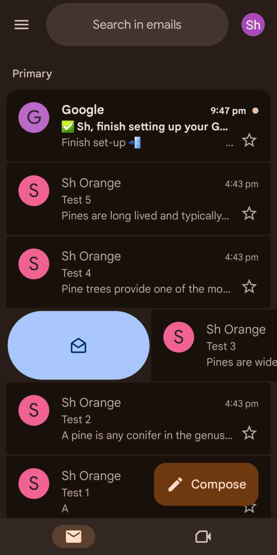
One thing I noticed was the fact that notifications had to be specifically set up in the right way, since not all emails seemed to show up in notifications, and only direct replies. This can be changed in the settings eventually.
The best mobile app depends on your purpose. Gmail excels in simple email tasks, while Outlook works better for productivity and business-centric use cases.
Winner: Split
Related: Did you know that Microsoft and Google also have two of the best chat apps for professionals? Learn more from our list of the best team chat apps in 2026.
7. Pricing
I looked at the pricing of Outlook and Gmail, both of which offer free entry points and tiered paid plans, but their pricing models differ due to their target audience.
Here is a quick overview of Outlook’s pricing plan, which is tied to Microsoft 365 and bundles email with the other desktop productivity apps.
- Outlook (Free): Basic email access
- Microsoft 365 Basic: $19.99/year
- Microsoft 365 Personal: $99.99/year
- Microsoft 365 Family: $129.99/year
Just a note on what I observed, the free plans do come with advertisements and promotional emails. This strongly recommends the priced plans, especially for medium-sized businesses and enterprises that require an email platform tied to Microsoft infrastructure, with storage and productivity tools.
Gmail pricing is bundled through Google Workspace, which is built for teams from the start:
- Gmail (Free): Personal use
- Business Starter: $6/user/month
- Business Standard: $12/user/month
- Business Plus: $18/user/month
Workspace plans scale cleanly as teams grow, with collaboration, admin controls, and storage included at each tier.
For small and growing teams, Gmail is generally more cost-effective and easier to scale, thanks to clear per-user pricing and business-focused plans. Outlook becomes more compelling at higher tiers, particularly when teams that rely on Microsoft desktop apps and advanced productivity tools are given top priority.
Winner: Split
Outlook vs. Gmail: My evaluation scorecard
Here’s a table summarizing all my tests with the winner and the reason.
| Task |
Winner | Why it won |
| Interface and user experience | Gmail 🏆 | Gmail’s clean, minimal interface makes onboarding simple and intuitive. Features stay out of the way until needed, making it easier for new and non-technical users to adopt quickly. |
| Email organization | Outlook 🏆 | Outlook’s folder-and-rule-based system provides structured automation and a clearer hierarchy. It’s better suited for users who prefer strict segmentation and inbox control. |
| Search and smart tools | Gmail 🏆 | Gmail’s search is more intuitive and flexible. Advanced field filtering (from, to, subject, time) allows more precise results with less friction. |
| Integrations and productivity | Split | Outlook excels within Microsoft 365 workflows (Teams, Word, Excel). Gmail shines in real-time collaboration across Google Workspace and third-party apps. The best choice depends on the ecosystem. |
| Security and spam filtering | Outlook (Enterprise) 🏆 | Both offer strong baseline security, but Outlook provides stronger enterprise-grade compliance and admin controls through Microsoft 365. |
| Mobile experience | Split | Gmail offers a lightweight, fast email experience. Outlook delivers a more unified productivity hub that brings mail, calendar, contacts, and files into one app. |
| Pricing and value | Split | Gmail scales cost-effectively for SMBs with clear per-user pricing. Outlook becomes more compelling for teams heavily invested in Microsoft desktop apps and enterprise workflows. |
Key insights on Microsoft Outlook vs. Gmail from G2 Data
As I mentioned, my testing was limited to introductory features that are available on the free plans. To go beyond and understand how other users and businesses rate Outlook and Gmail, I also reviewed G2 product data. This helped me understand and present how users with different use cases adopt Outlook and Gmail. Here’s what stood out to me:
Satisfaction ratings
- Gmail consistently leads on usability-focused metrics, earning especially high scores for ease of use (95%), ease of setup (93%), and ease of admin (91%). These results suggest a strong appeal among teams that value quick onboarding and intuitive workflows.
- Outlook also scores highly overall, particularly for meeting requirements (93%) and ease of setup (92%), but trails Gmail slightly on ease of use (91%), reflecting its more feature-dense experience.
Customer segment distribution
- Google Workspace skews heavily toward small businesses, with 44% of reviewers coming from companies with 50 or fewer employees, compared to 25% for Outlook. It also maintains a strong mid-market presence at 38%, but has a smaller enterprise footprint (17%).
- Outlook, by contrast, shows significantly stronger enterprise adoption, with 39% of reviewers representing organizations with more than 1,000 employees. Its mid-market presence is comparable at 36%, but it trails Google Workspace among small businesses.
Top industries represented
- Gmail sees broad adoption across information technology, computer software, marketing and advertising, education management, and financial services — highlighting its popularity with cloud-first and fast-moving teams.
- Outlook is most commonly used in IT services and software. Still, it shows stronger representation in healthcare, financial services, and higher education, pointing to adoption in more regulated and structured environments.
Highest-rated features
- Gmail’s top-rated features are AI-driven productivity tools, including AI text summarization (85%) and AI text generation (85%), reinforcing its focus on assistive communication and efficiency.
- Outlook stands out for cross-system integration (84%) and proactive assistance (83%), reflecting its strength in coordinating email with calendars, files, and enterprise workflows.
Lowest-rated features
- Gmail’s lowest scores appear in autonomous task execution (79%) and proactive assistance (81%), suggesting room for deeper automation.
- Outlook’s lowest-rated features center on generative AI capabilities, including AI text-to-speech (80%) and AI text generation (81%), which lag behind its core productivity strengths.
Frequently asked questions (FAQs): Outlook vs. Gmail
Got questions? G2 has the answers.
Q1. Is Outlook more secure than Gmail?
Both Outlook and Gmail offer strong security, including encryption, spam and phishing protection, and multi-factor authentication.
Outlook often has an edge in enterprise-grade compliance through Microsoft 365 features like data loss prevention and advanced admin controls. Gmail is widely praised for its AI-powered spam and phishing detection and offers strong security through Google Workspace plans.
For most users, both are highly secure.
Q2. Do professionals use Gmail or Outlook?
Yes, both are widely used by professionals. Outlook is common in mid-market (36%) and enterprise organizations (39%) that rely on Microsoft 365 tools like Teams, Excel, and SharePoint, especially in healthcare, finance, and education.
Gmail is popular among startups and small businesses (44%), marketing teams, and cloud-first organizations. Adoption typically reflects the broader productivity ecosystem a company uses.
Q3. What is the best email service?
The best email service depends on your needs. Outlook is ideal for structured workflows and enterprise integrations. Gmail excels in usability, collaboration, and powerful search.
Both rank among the best email platforms available; the right choice depends on your ecosystem and workflow preferences.
Q4. What is the best free email service?
Gmail and Outlook are two of the most widely used free email services. Both offer 15GB of free storage and strong spam filtering. Gmail is often chosen for its ease of use and search capabilities, while Outlook appeals to users who prefer a more structured interface and integration into Microsoft products.
On G2, small businesses that are likely to use free email services use Gmail (42%) more than Microsoft Outlook (25%). Overall, I would say the free versions of both Gmail and Outlook perform equally well and are the best in the industry.
Q5. What is the best email service for personal use?
For personal use, G2 Data cites Gmail as the top choice for personal use, due to its intuitive design and integration with Google services. G2 Data reinforces this, and Gmail gets a 93% score for ease of use and 95% for ease of setup, while having the highest market presence for any email service (99%).
That said, Outlook is the runner-up for personal use and a strong alternative for users who prefer folders and tighter integration with Microsoft services. This gives it the second-highest market presence among all email services (86%).
Ultimately, I feel the best choice largely depends on whether you prefer the Google or Microsoft ecosystem and which tool you are habituated to.
Q6. What is the best secure email service?
Among mainstream providers, both Gmail and Outlook offer robust security protections. Outlook may provide stronger enterprise compliance tools through Microsoft 365. Gmail offers excellent built-in spam and phishing protection powered by AI.
For most individuals and businesses, both are secure enough for everyday use.
Q7. What’s the difference between Outlook and Gmail?
Outlook emphasizes structure and enterprise productivity, with deep integration into Microsoft 365 and folder-based organization. Gmail focuses on simplicity and cloud collaboration, with labels and powerful search in Google Workspace.
The main difference lies in the ecosystem and workflow style.
Q8. Is Gmail or Outlook better for business?
It depends on your tech stack. Outlook works best for Microsoft-centric organizations needing advanced admin controls. Gmail suits cloud-first teams that value ease of use and real-time collaboration. Both are strong business email solutions.
Q9. Which is easier to use?
Most users find Gmail easier to learn due to its clean interface and powerful search. Outlook offers more advanced features, though it may require more setup time.
Q10. Can Outlook and Gmail work together?
Yes. Gmail accounts can be accessed through Outlook using IMAP or Exchange configurations. However, each platform performs best within its native ecosystem.
Q11. Which has better organization tools?
The better option depends on whether you prefer structure or flexibility. Outlook uses folders and rule-based automation for structured inbox control. On the other hand, Gmail uses labels and smart filters, combined with powerful and intuitive search, for flexible organization.
Choose Outlook if you need a clean and structured system that organizes by files. Choose Gmail if you need a flexible email service that is more intuitive to use.
Outlook vs. Gmail: My verdict
Even before reaching a verdict, my comparison of Outlook and Gmail reinforced the fact that these are the best email platforms out there for a reason.
After testing them for usability, integrations, security, and pricing, I have one main takeaway: The best platform depends on what you will use it for.
Outlook continues to remain the more structured and enterprise-ready solution. It performs especially well in environments that rely on Microsoft 365, advanced automation rules, and centralized admin control. For large organizations and regulated industries, it delivers the depth and governance many teams need.
On the other hand, Gmail stands out for its simplicity and scalability. It consistently stands out for ease of use, intuitive to learn, fast onboarding, and seamless collaboration inside Google Workspace. For SMBs, startups, and cloud-first teams, it often feels lighter, faster, and easier to manage day to day.
If you need tight integration with desktop productivity tools and strong compliance controls, Outlook is a smart choice. But if you prioritize intuitive workflows, real-time collaboration, and flexible growth, Gmail has the edge.
Looking for the best tools to help you market via email and tap into the vast userbase? Check out G2’s best free email marketing software and find the right one for your business!

💸 Earn Instantly With This Task
No fees, no waiting — your earnings could be 1 click away.
Start Earning
