


According to the people who made Tomb Raider II, Winston the butler was classed as a violent enemy. That was how they got the old boy to follow Lara around her house. He had no weapon, so all he could do was pursue her with what I can only assume was considerable malice and a tea tray. As for the infamous business with the walk-in freezer, Heather Gibson realised you could shut him in there and decided to leave it in. All these years later, here I am reading two books about the making of Tomb Raider and the first thing I want to tell you is that, technically, locking the butler in the freezer was self-defence.
I wanted to read Daryl Baxter’s 2021 book The Making of Tomb Raider alongside its follow-up, The Making of Tomb Raider: 1997–2000, because I’m a bit of a Tomb Raider noob and figured I’d appreciate the context. Sure, I played the OG game back in the day and dabbled in a few of the sequels, but my tomb raiding career was shortlived. I’m glad I read them. The first book covers the making of the original game and its sequel. The second follows the changing team at Core Design through Tomb Raider III, The Last Revelation and Chronicles, with room for the PC expansions and Lara’s first Game Boy outing.
Take Paul Douglas describing a staff meeting on the original Tomb Raider. There were six full-time team members in one room. A meeting involved swivelling round in your chair, and if it had nothing to do with you, you could keep your headphones on. Then you hear what they were actually discussing. In Paul’s recollection, Toby Gard had a John Woo vision for the combat, right down to how the camera might frame Lara taking on the T-Rex. He imagined a cinematic camera, and the player having to perform specific actions to take down the beast. The programmers liked the idea that you could leg it and hide in a cave, and otherwise tackle the big boy however manner the player saw fit. You can see the appeal of both, and Paul is quite open about which one they had time to build. That’s a hell of a lot of game design in one dinosaur.
“I said, ‘No f****** vehicles!’ We confirmed it at Grundy’s, and they all made f****** vehicles. ****.“
— Martin Gibbins, The Making of Tomb Raider: 1997–2000, p. 120
The size of that room sticks with you when Baxter gets to the success of the game and two of the people who made it decide to leave. Jeremy Heath-Smith remembers Toby pushing back over the marketing, and the hours lead programmer Paul Douglas worked trying to finish the game. He also remembers practically begging the pair of them to stay and collect the money about to come their way. What I like about this passage is how much you learn about Jeremy himself. All these years later, he can tell you what the work cost Paul and still sound genuinely baffled that anybody could walk away from those royalties. You get to sit with that for a bit.
There’s a smaller example involving the missing music in the original PC game. Composer Nathan McCree remembers a bug, a later patch and the sinking feeling of his music disappearing. Programmer Gavin Rummery remembers disabling it himself. As he tells it, seeking a track on the CD paused the game for just long enough that Lara could miss a ledge. Baxter puts those recollections one after the other. He says in the second book that he wanted at least two people to corroborate each story, and here in the first you can see why two people who worked on the same game might come away with quite different accounts. I couldn’t tell a diehard fan how much of this is new information. I’m sure a lot of what is in these books is already known. But I can tell you that hearing the composer and the bloke who had to switch his music off describe the same problem is worth the price of a few pages. And I’d hazard there’s going to be quite a few little details in these hardcovers that isn’t common knowledge.
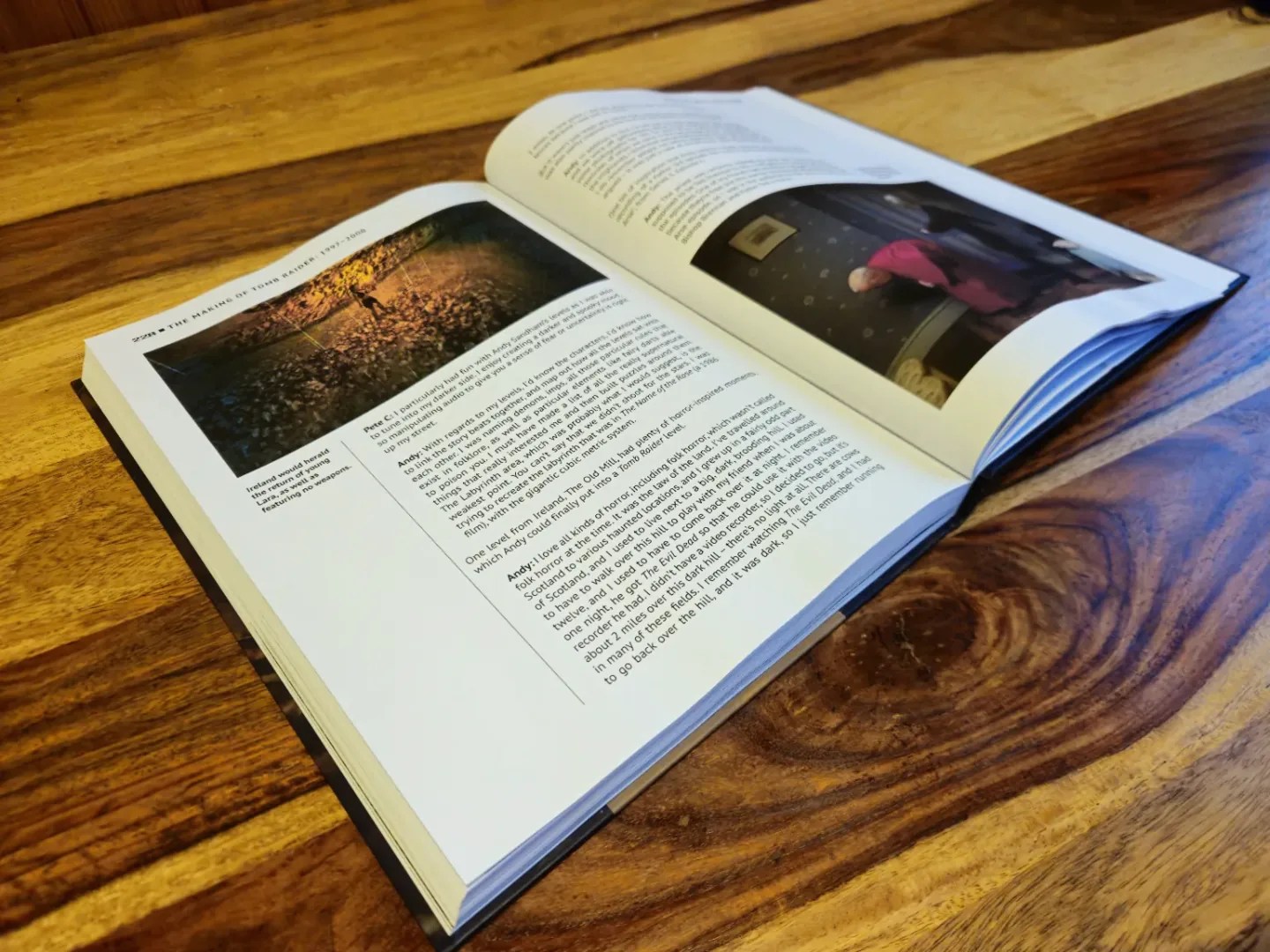
Baxter explains that what drew him back for book two was his curiosity about things rumoured to have been cut from Tomb Raider III. A level set in Peru? A knife? What gave him a whole book was the prospect of a new team taking over Lara and having to keep these games coming every year. He started making calls three days after a Tomb Raider event in Derby in October 2023 and was still conducting interviews in January 2025. There’s a lot of work in tracking those people down, getting them talking, transcribing the conversations and collecting the photographs, storyboards and room-editor screenshots. Baxter’s own questions generally disappear from the finished page and the answers of his interviewees have minimal editing, so there plenty of room to wander. Sometimes that makes for a dry few pages as you read through walls of explanation from someone who goes into detail about how a situation played out or a level was designed. Sometimes it takes you to Father Ted.
On page 229 of book two, Andy recalls being in the studio audience for the episode classic British comedy Father Ted, where Ted kicks Bishop Brennan up the arse, a personal favourite of mine. Turns out some of that found its way into Father Patrick, the priest in Tomb Raider: Chronicles. “The priest was certainly inspired by Father Ted. I think he was supposed to be Ted,” said Andy.
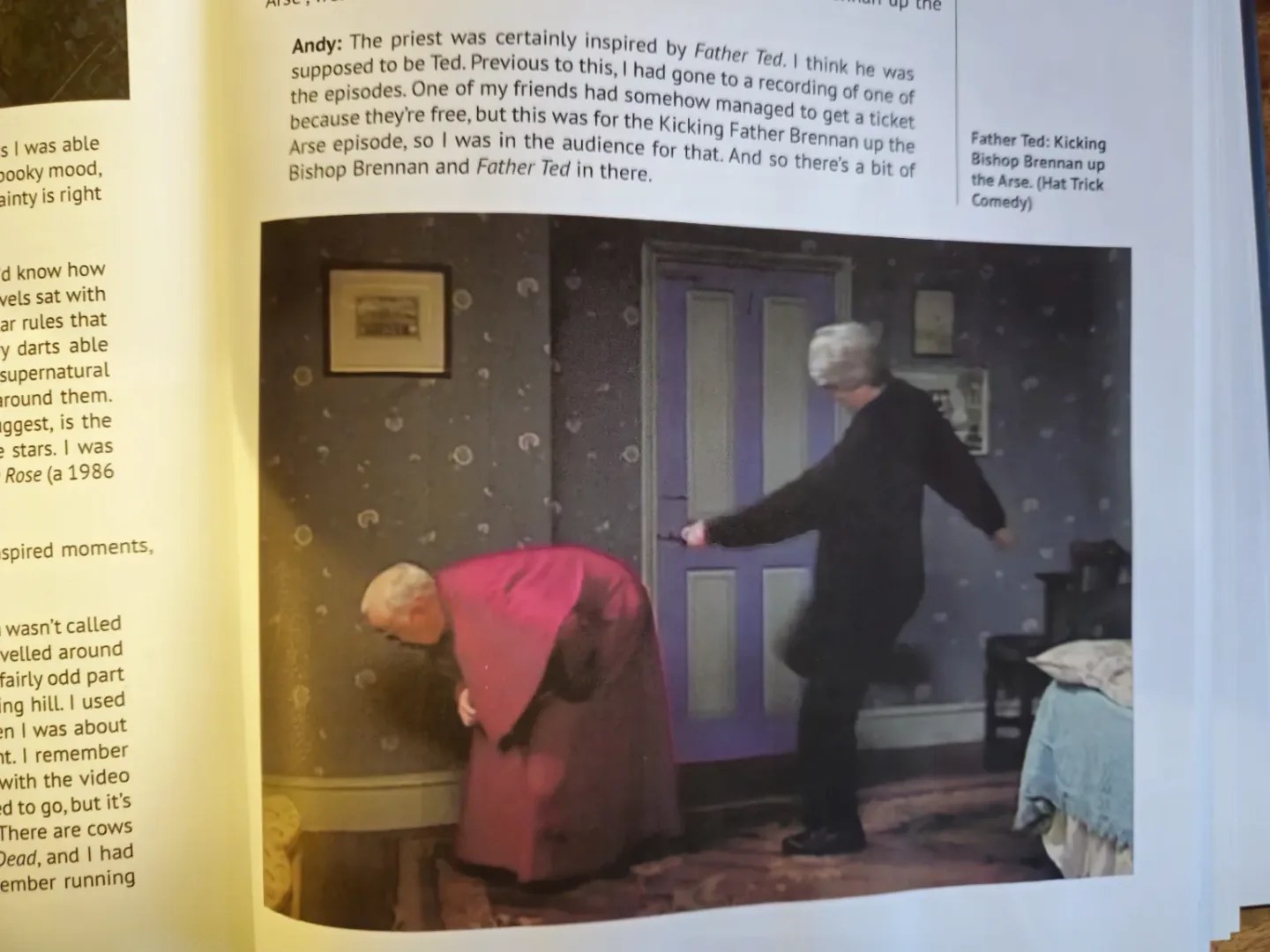
“The priest was certainly inspired by Father Ted. I think he was supposed to be Ted,”
– Andy Sandham, The Making of Tomb Raider: 1997–2000, p. 229.
There’s even a still from the episode in the book. A little further on, Official PlayStation Magazine writer Dan Mayers remembers visiting Derby to review the same game. The build couldn’t be played from start to finish, so the reviewers jumped around using saves or level select, with a demonstration and some time left alone to play. Dan recalls going for a score of ten. As someone who reviews games, I wouldn’t be caught dead sticking a score on one under those conditions. I appreciate his candour about it, especially since he has misgivings of his own looking back on the situation.
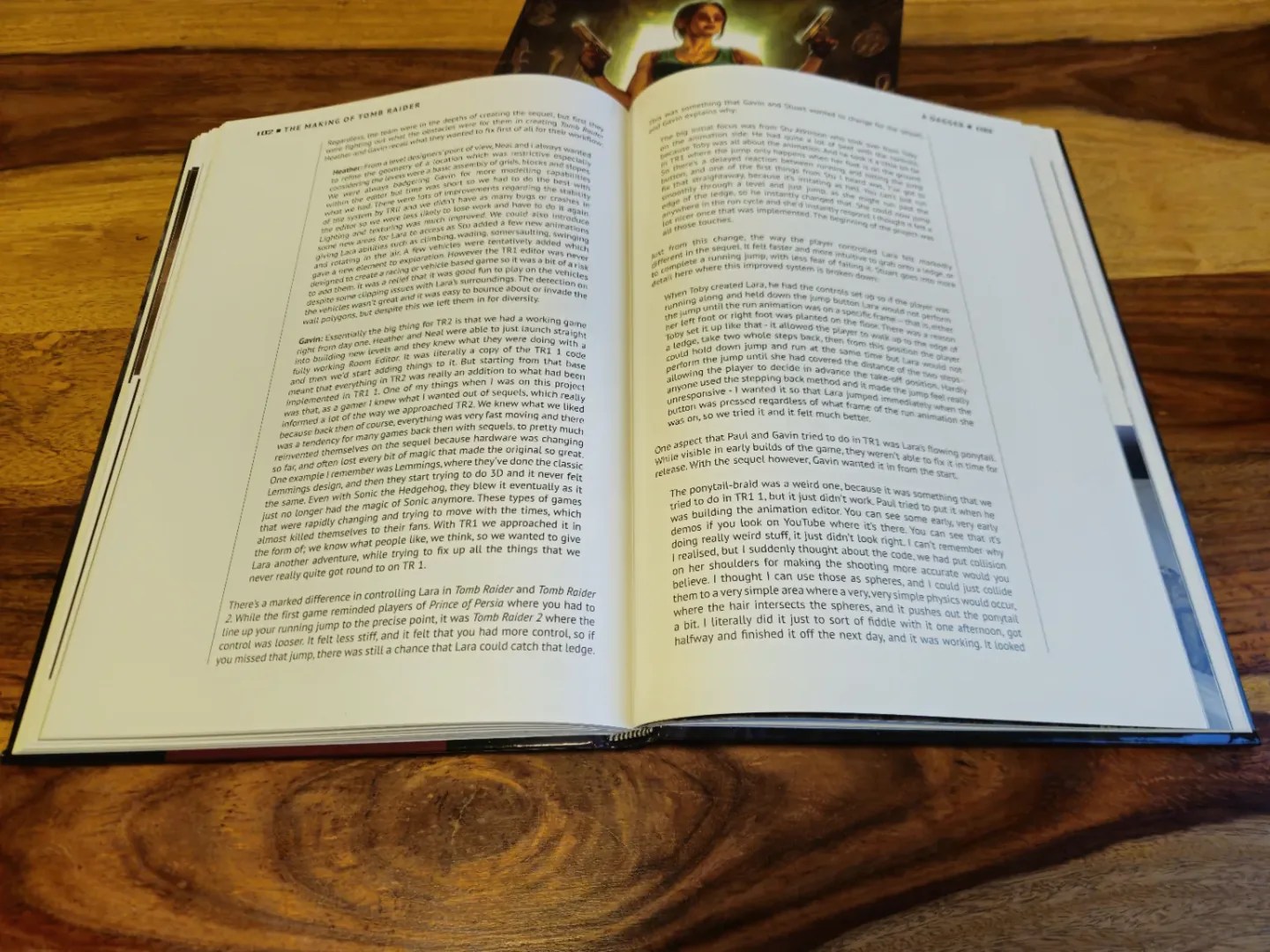
I could happily keep raiding these tomes for stories, but, like one of Lara’s original triangular boobs, I do actually have a point. There are times when I wanted Baxter to step back into the conversation. The first book does this quite well. On page 103, for instance, Gavin explains the delay when you tried to make Lara jump. Baxter takes a moment to describe how the change felt to a player, then hands over to Stuart to explain why the old jump worked that way in the first place. By the time Stuart starts talking about which of Lara’s feet is planted on the floor, I have the context I need.
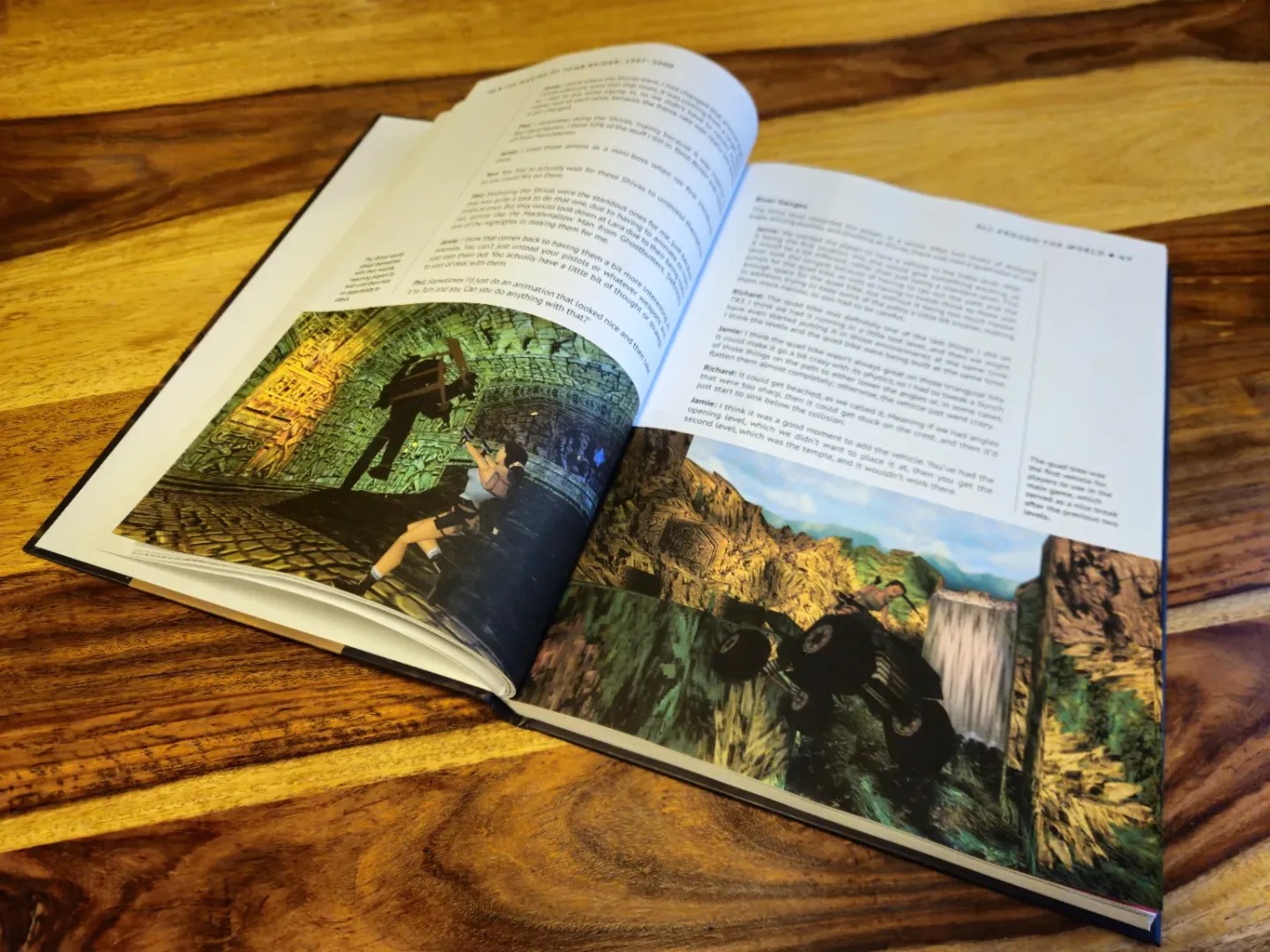
The second book leans much harder on a name in bold followed by a chunk of interview. It’s handy when several people weigh in on the same subject, provided I know who they are. On page 121, Andrea Cordella appears during a discussion of the development schedule. As someone with limited knowledge, I have no idea who she is or why she’s popped up mid-flow.
It isn’t until two pages later I learn that Andrea started out modelling weapons and pickups. That little bit of context would have been welcome two pages ago. Stranger still is a section called “Surrounded by Wolves” on page 190. Mike has been speaking, then the text shifts back to where the author’s prose normally sits, and somebody starts telling me about their first day in Derby. Who the hell is talking? Over the page, Mike discusses the reception Phil Campbell got and Phil describes arriving that day. I reckon it’s Phil. I’d quite like a book built around first-hand accounts to tell me whose first hand we’re dealing with, though.
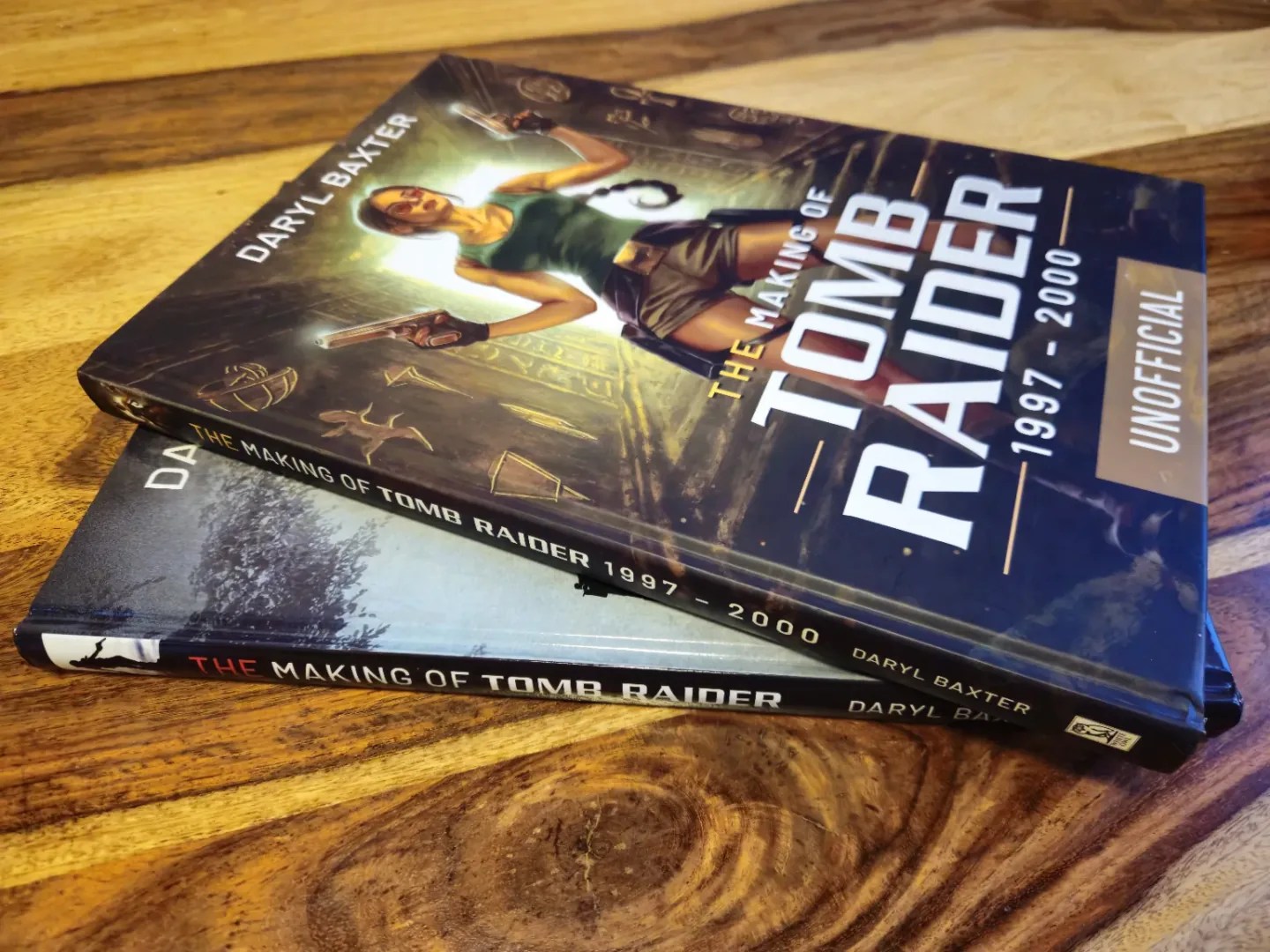
That sort of scruffiness surprised me in a published book. I found quite a few mistakes throughout both tomes, actually. A little more editing, particularly around the introductions, would have made a big difference to how smoothly the second volume reads. And then a little more editing on top of that would have helped tidy both titles up, catching the formatting mistakes. But these issues are not enough to ruin the read.
“I remember Nathan just being in the cellar, with two keyboards and an Amiga, and I’m still amazed the room didn’t blow up.“
— Jeremy Heath-Smith, The Making of Tomb Raider
My other complaint is considerably pettier. These are lovely hardbacks with satisfyingly weighty, smooth pages, and at £25 and £35 respectively I think they’re fairly priced. So why is the first cover glossy and the second one matte? Yes, I’m the sort of book nerd who cares about that. I want my matching set to match, dammit.
Between them there are 400 pages here. If you’ve just discovered Lara and fancy a quick history of her adventures, that’s an awful lot of detail about the timing of a running jump. If you love Tomb Raider, or you’re the sort of person who wants to know why a programmer might deliberately take perfectly good music out of a game, these are fantastic books. I came to them knowing relatively little about Core Design and came away thinking about six people swivelling round in their chairs, and what it must have felt like when the thing they’d made in that room got big enough that some of them wanted out. Baxter reckons The Angel of Darkness is a story that could fill a book of its own. After reading these two, I’d happily make room on the shelf for a third.
In Conclusion…
Ultimately, these books are not about Tomb Raider. They’re about the people behind Tomb Raider. Darly Baxter has collected together the oral histories of the folk who sometimes drove themselves nearly to breaking point to make a franchise that has become a cornerstone of gaming.
A final editing/formatting pass and maybe a little more author voice in the second volume to help guide the stories would have been welcome, but these are tomes you absolutely should raid.


💸 Earn Instantly With This Task
No fees, no waiting — your earnings could be 1 click away.
Start Earning